The Portal’s Keeper
LaJuné McMillian, Child/ren of the Bloom, Pioneer Works, 2026.
Courtesy of the artistIn LaJuné McMillian’s work, portals are not fixed; they’re ever-changing spaces where one state gives way to another. They’ve long sought to render liberation as something that’s seen and felt, rather than merely imagined—and their latest show, Child/ren of the Bloom, takes that pursuit underwater, where the deep becomes a site of spiritual communion. Up at Pioneer Works through December 20, 2026, the exhibition integrates their research on phytoplankton, algal blooms, and bioluminescence into a divine encounter with oceanic systems.
Child/ren of the Bloom follows Child, a recurring avatar in the artist’s digital and sculptural work, through a portal where water becomes a metaphor for an early encounter with the spirit world. As Child dissolves into oceanic life, McMillian draws a thread between their own childhood experiences and the foundational role of phytoplankton within marine ecosystems. Moving between scales—from microorganism to ocean and from atmosphere to cosmos—the installation harnesses interactive video, beaded embroidery, holographic displays, and 3-D models of early ecological drawings to reveal a world in constant flux.
Ahead of the show’s opening, we hosted the artist in conversation with writer and curator ruth gebreyesus to discuss algal blooms, the potent power of spirit, and sovereign selves past and future.
—The Editors
Your show's opening in just over a month, but it's been in gestation for a while. When did the concept of the show—and the questions that you ask and answer in it—come about?
The project is under this larger umbrella called Mother of the Sun. I've been really interested in this idea of the great cosmic mother who gave birth to the sun, and I've been thinking about different avatars of myself. I've been working with my child avatar, my future self avatar, and then also my spirit avatar. In January of 2025, we got this really cool opportunity with OceanX to travel from Indonesia into Singapore on their research vessel. We were learning all about the ocean, and I think one question that was coming up for me was: What is the water asking me and asking of me? [I started] writing these series of prayers [for the ocean], and prayers for humanity.
I was looking at the water and the ocean as an origin story [that I could] connect to my childhood and my early childhood experiences. The narrative of the work is me as a child walking into the ocean and reconnecting to the water.
I feel like mythology is a pretty common theme throughout your work. It makes me very curious what you read as a child.
It's really weird actually. When I look at my family, a lot of their relationships to religion were very dispersed and different. My mom basically grew up learning about different religions. And then once she became an adult, she decided that she would just be spiritual, and she raised me to just be able to explore and do whatever it is I wanted to do.
My relationship to spirit did start very young. I've always been very deep in my mind and my imagination. I grew up in South Jersey as an only child, so I was always just talking to myself and communicating with the spirit world in that way. Some of it was just me in my imagination, and then some of it was very traumatic, too.
Everyone comes to belief differently, of course, and it's a lifelong negotiation. I'm so curious how phytoplankton and the mythology around those creatures became apparent to you.
So funnily enough, I had just left my job as a figure skating director where I’d been about to organize an entire ice show called Bloom. [It was] just going to be about a spring day. But I was really interested in the word “bloom,” and when I left my job I got onto the ship and met a scientist named Phyllis who was doing a lot of work and research on phytoplankton. She started telling me about the algal blooms, and I was like, "Oh my gosh, maybe spirit wants me to work on algal blooms, not just the bloom of a spring day."
When I got onto the ship, I tried to just go there with an open mind. I allowed that time to just be about learning about phytoplankton and algal blooms. It was really exciting. And then once I got off the ship, I was just like, "How, can I take this research and integrate it into the systems I've been developing for the past decade?”
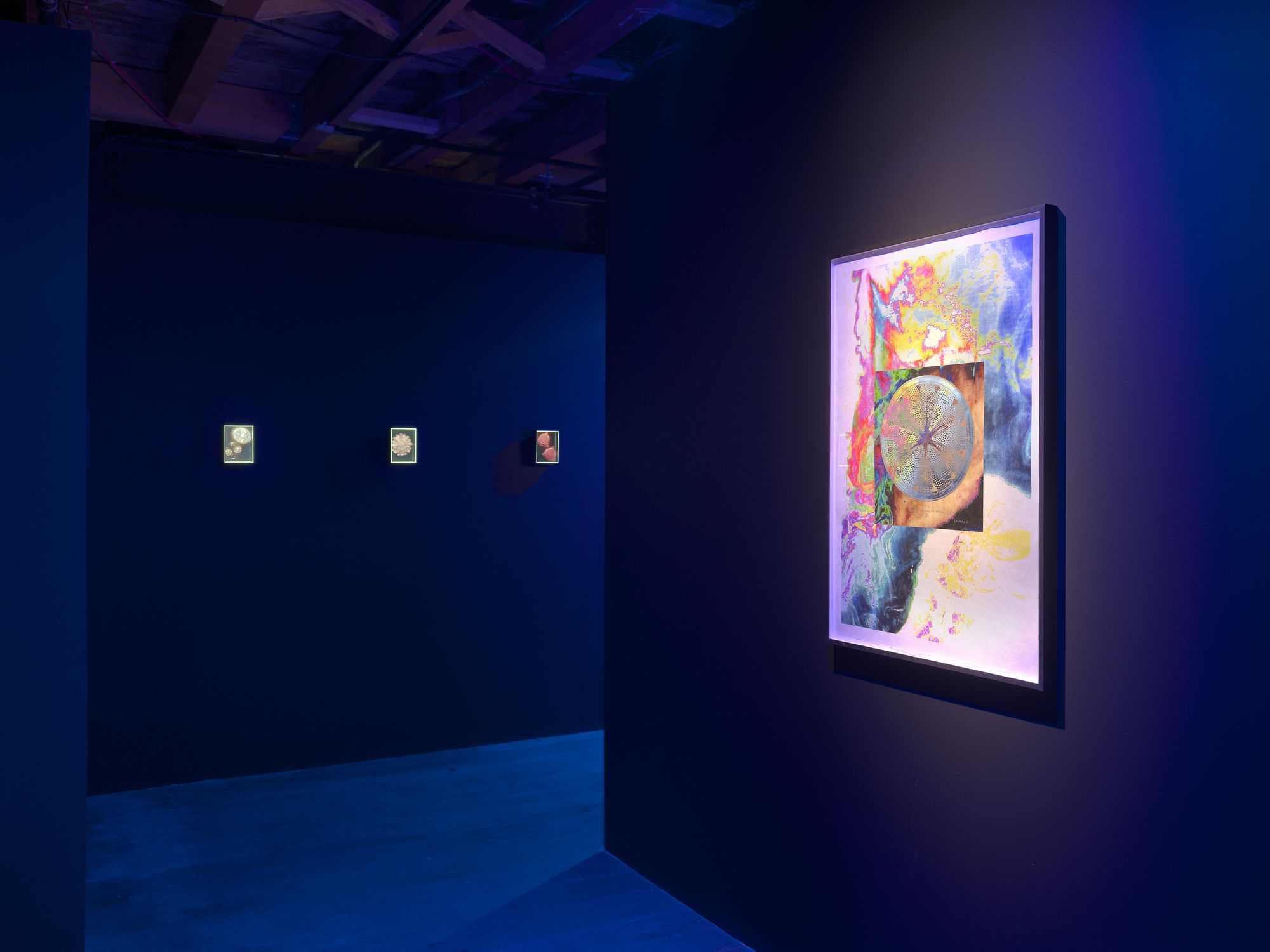
Installation view of LaJuné McMillian, Child/ren of the Bloom, Pioneer Works, 2026.
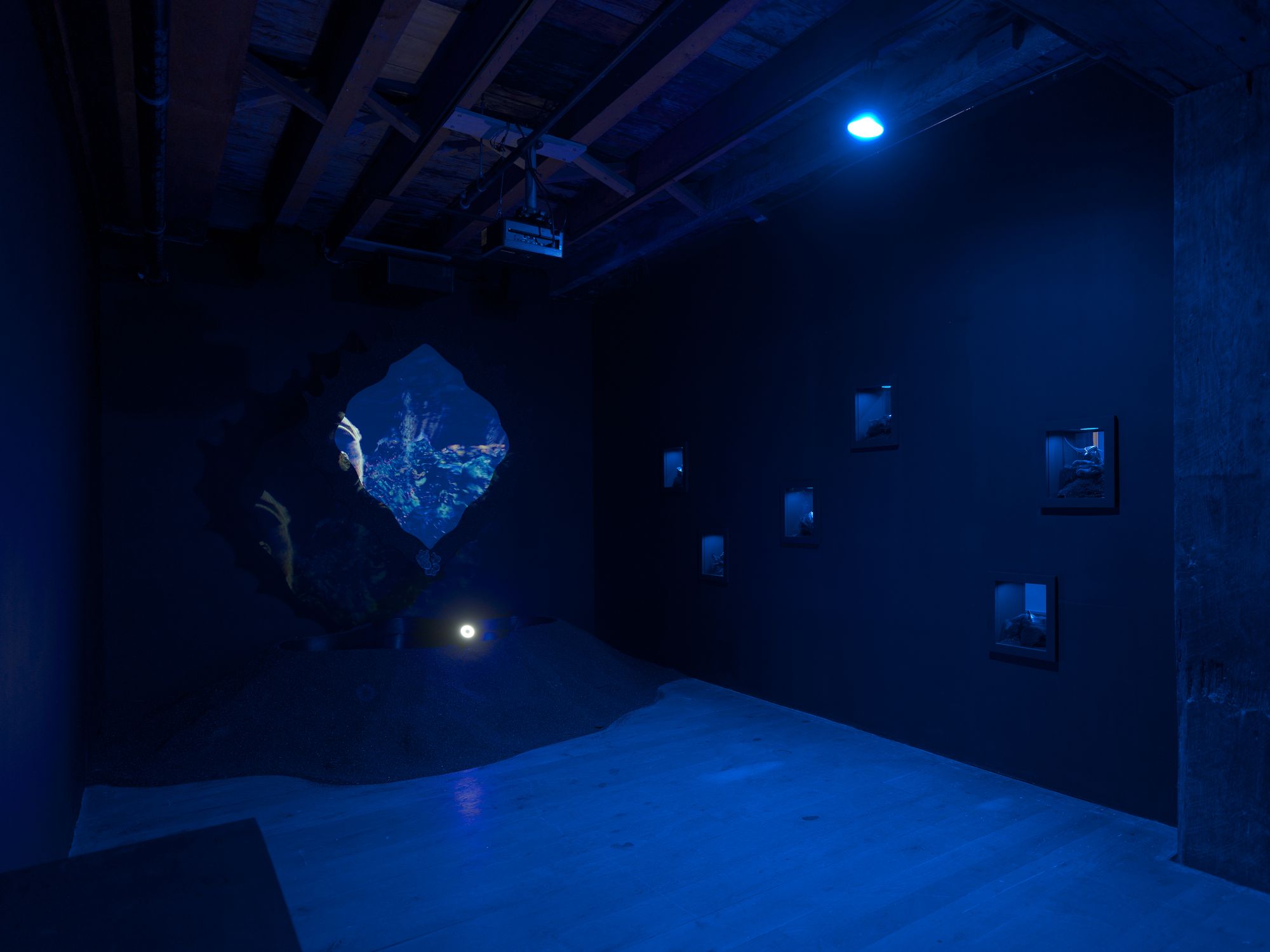
Installation view of LaJuné McMillian, Child/ren of the Bloom, Pioneer Works, 2026.
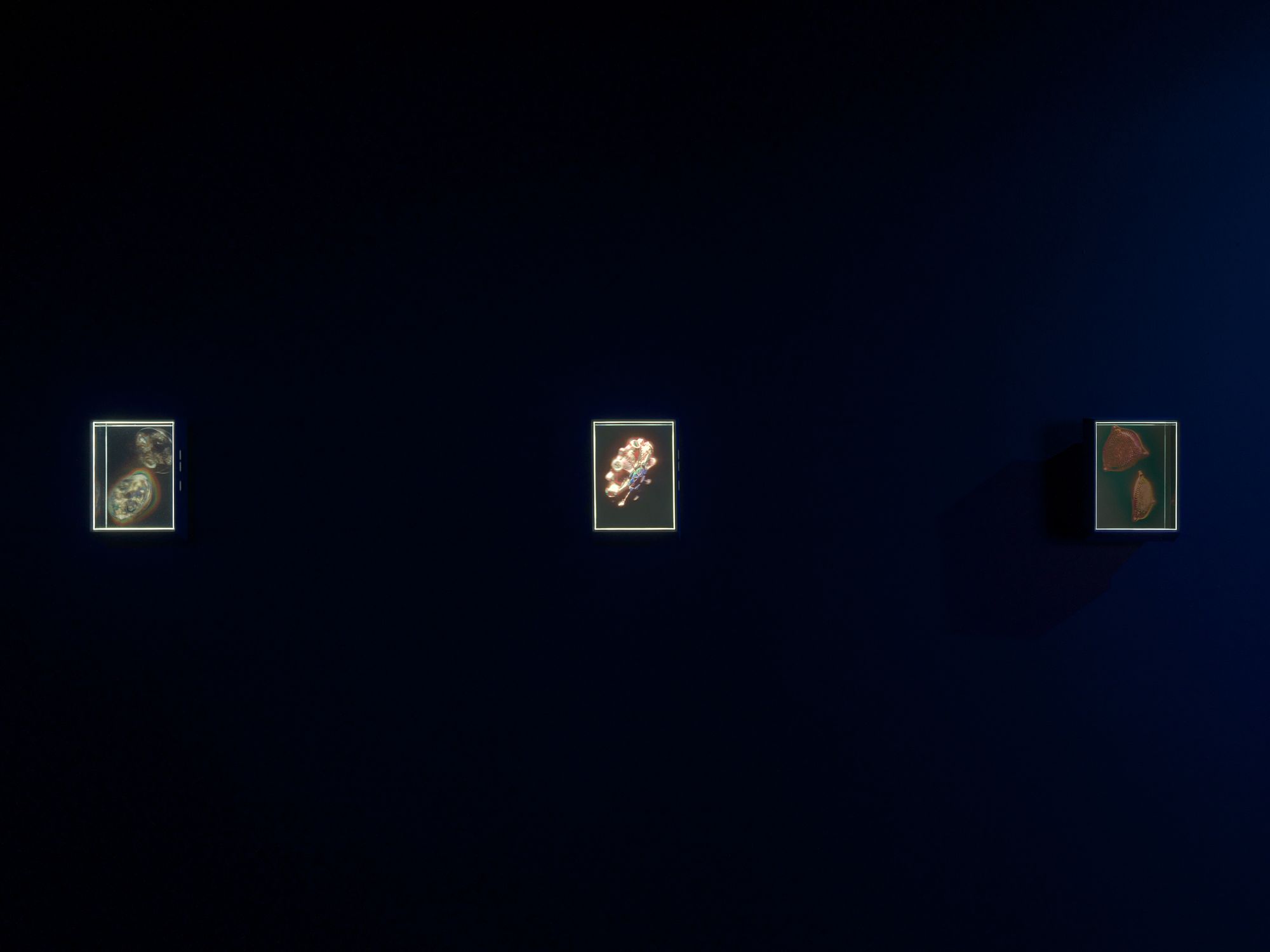
Installation view of LaJuné McMillian, Child/ren of the Bloom, Pioneer Works, 2026.
I love that. Phytoplankton are a particular creature. They feed on water and sunlight. What features about the phytoplankton specifically intrigued you, and what made the technologies of their existence magnetic or interesting to explore?
I did not know about phytoplankton before. So I was just like, "Wow, there are these tiny creatures that are the reason that ocean life exists, but then they also produce oxygen." They're doing all of this invisible work and this invisible labor. When I was learning about the algal blooms, I thought at first that they could be a metaphor for some sort of collective intelligence. But then as I was doing more research, I realized they [more closely resembled] a distributed network. Each node, each phytoplankton, is responsible for themselves. It reminded me of how we're all part of this distributed network, even when power is concentrated in one space. What does it mean to return to that distributed network as a way to find the self-sovereignty and collective sovereignty that we so desperately need?
Yeah. I love this idea so much because phytoplankton are not charming megafauna. When you're in conservation, there are certain animals that are very easy to fundraise around or to sort of build policy around, which goes hand in hand with the way power functions, both around capital and legal infrastructures. For example, lions are charming megafauna, so when you say a lion is endangered, everyone can rise because they have this specific mythology.
The epistemology of conservation biology and ecosystem studies is based in a racist capitalist system, so it takes on the traits of that and creates these individual good creatures while invisibilizing the laborious and useful creatures. Phytoplankton are thought of as a keystone species, but even that can be argued as an invisibilizing of sorts, right? You put them as the base, but you don't study their sovereignty.
The idea of sovereignty at the individual scale can easily be mistaken for a puritanical bootstrapism: “Well, they take care of themselves." But that's not what's going on here, right?
Exactly. And that's why the network is so important. It's not just one node existing by itself, it’s working together with the other nodes in the system. As an artist, I’ve been coming back to my own self-sovereignty lately, because I've felt this overwhelming reliance on different systems and structures that were not built for me.
Yes, I need support and help and all that stuff, but I still have agency and enough power to be able to build the worlds and systems that I wanna see in the world, and to ask people to do that work and that labor with me. When I first started making art, I was trying to be dutiful—to help from a space where I wasn't sovereign myself—until I didn’t have anything left to give. So then I had to take a break, which is why I was skating. I had to get my life together before I could return to that reciprocity with the world.
Hopefully the process of building this show has been a reflective process where you're like, "Oh, so much of my art was in reaction to feeling this way about the system or trying to solve from the inside for others what I haven't rectified for myself."
I think a lot about paternalism. A good example is how when you're on the subway, there's no parent in the room. So if a crisis happens, we each have to understand our own power to meet that crisis, because there’s no train conductor in view. But when we're on a bus, for example, we're like, "Hello, driver, can you help? Something's going on."
If there's a crisis in the world, I think we all have a paternal sort of instinct to be like, "Where's the parent in the room who can help us?" We forget that we have the agency or the sovereignty to be in charge to some extent—not so we can take it over and replicate that paternal system ourselves, but so we can work together.
I'm really curious about the ways that sovereignty can help us understand our own capacities.
I vibe with that 100 percent. It brings me to my relationship with leadership. Oftentimes if I'm teaching a class or directing a program, I’m trying to lay the groundwork for others.
You're shepherding people's time and the resources you're all sharing together.
Yeah. I always want to make sure that I'm not doing it in a way that's disempowering for the people that I'm working with. It's such a weird situation.
It is. I spiral about this. When I was curating films at a museum, I was [making introductions at screenings] a lot. I would have seen the films a maximum of two times, but because I was behind a podium and there was a mic, all of a sudden people thought I knew so much about this film, this director, this topic. I would be like, "Well, we're gonna experience this together." I hated the way that podium differentiated me from the experience that everyone else was having, which was the experience I was really interested in creating.
It would be interesting if there was a program where different people introduced it from the audience or something. But I also understand that there is a need for somebody to say, "This is what's gonna happen next,” and that creates a sense of safety. But how can that happen without tapping into the sovereignty of other people? Maybe phytoplankton have the answer.
Exactly. That's what I'm hoping. [laughs]
They can be dispersed and sovereign, [but can also] perform intense takeovers of different water bodies. How did you translate that experience into a show?
I primarily work in a gaming engine called Unreal to create these different worlds. One of them has this under-the-microscope feel, where you’re able to see them up close, drifting through the water. But then it zooms out into the human scale, and you're able to see them as a bioluminescent particle. Then it zooms out again into a satellite version. You're hearing a narrative that integrates the prayers with information about the phytoplankton, but then also integrates all of these other topics that I'm just mixing together.
I've been creating these 3-D prints of the phytoplankton as well. I took all these images of phytoplankton—electron micrographs and drawings—and used AI software to turn them into 3-D models. Then I printed them out using a 3-D printer. I'm using this filament that's really interesting, silk iridescent polylactic acid (PLA). I've been super excited about this show because I'm pushing myself to move more into sculptural practice. I'm creating these beaded and embroidered algal blooms, but also have these holographic displays. I've been interested in how I can tell a story or world-build through various mediums.
Installation view of LaJuné McMillian, Child/ren of the Bloom, Pioneer Works, 2026.
Photograph by Dan BradicaInstallation view of LaJuné McMillian, Child/ren of the Bloom, Pioneer Works, 2026.
Photograph by Dan BradicaThat's so lovely. You just named so many different kinds of technologies that you're employing, including embroidery and AI translation and beadwork, and it’s pretty stunning to think about how many decades of knowledge exist between those things.
One of the things I always wanna make clear with my practice and my work is that technology can take on various different forms beyond the digital. How can we navigate these tools and softwares while questioning the power?
We're giving all of our information and data to these corporations that are using it to feed their AI models and destroy the Earth in the midst of it. So what does it mean to use these tools through an ethical lens? That's something that I'm deeply interested in.
In my earlier works, I was primarily working with motion capture technologies, which I still use to create all my avatars. I’ll have on the suit and I'm recording it. But I've also been developing something I call motion witnessing, which allows the software and the tools to be imperfect. When I'm teaching about this, we’ll do a lot of movement exercises where we witness each other, embody those movements for each other, and then record it with a notebook and pencil.
How is digital technology seeing us and witnessing us? What do we lose by reducing [those actions] to the word “capture,” which is such a violent word, right? How can we integrate these tools in ways that are healthier for us? I think it starts with how we speak about them.
Witnessing is not neutral, for both machines and people. We're quite capable of being bad ourselves. But your work belongs in that legacy of Black writers and artists who question the medium while using it. I'm curious how your relationship with technology has changed over the years.
Yes. I mean, it's definitely grown and expanded. When I first started working with a lot of these digital tools, it was very intimidating for me to learn how to code and how to work with them. And that first layer of intimidation I realized was embedded in the user experience. I've seen that over the years with so many of my students from so many different backgrounds, and it keeps us from not wanting to learn how to use these tools or work with these tools. At first I was like, "Oh, then that just means we just need to make our own tools." But then I realized very early on, that I wouldn’t know what needed to be fixed if I wasn’t working with what was widely available.
What I love so much about using these digital tools and technologies is that they're pretty unforgiving in that they show you. A lot of the tools that I use are dealing with the body, so you can see how the initial developers felt about bodies and race just by noticing the skin tones, face shapes, body shapes available in sliders.
I needed that period of base research to overcome my initial intimidation, and in the past few years, I’ve come back to my body. I grew up figure skating in South Jersey, and I didn't realize how much trauma there is in being in spaces that hate you and your body 24/7. I didn't realize that I had been accumulating all of that. When I stopped skating and I stopped coaching the first time, I stopped moving. And yet, I was starting to do this Black Movement Library project where I was working with different performers. I would basically try to hide myself behind the screen. But these past few years, I've been pushing myself to perform. Now I'm working with my own avatars. I realized that my body and my voice are powerful technologies, too.
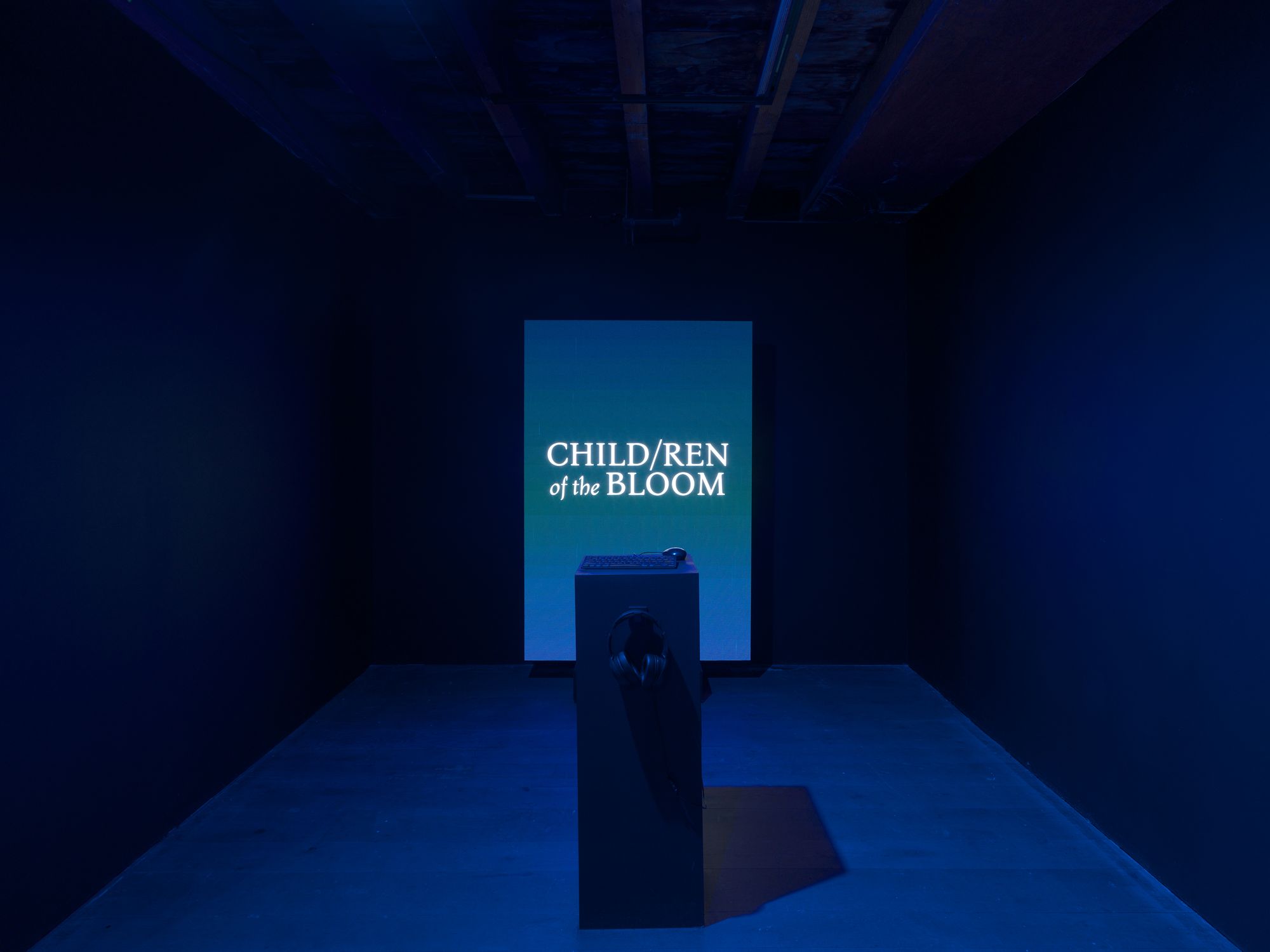
Installation view of LaJuné McMillian, Child/ren of the Bloom, Pioneer Works, 2026.
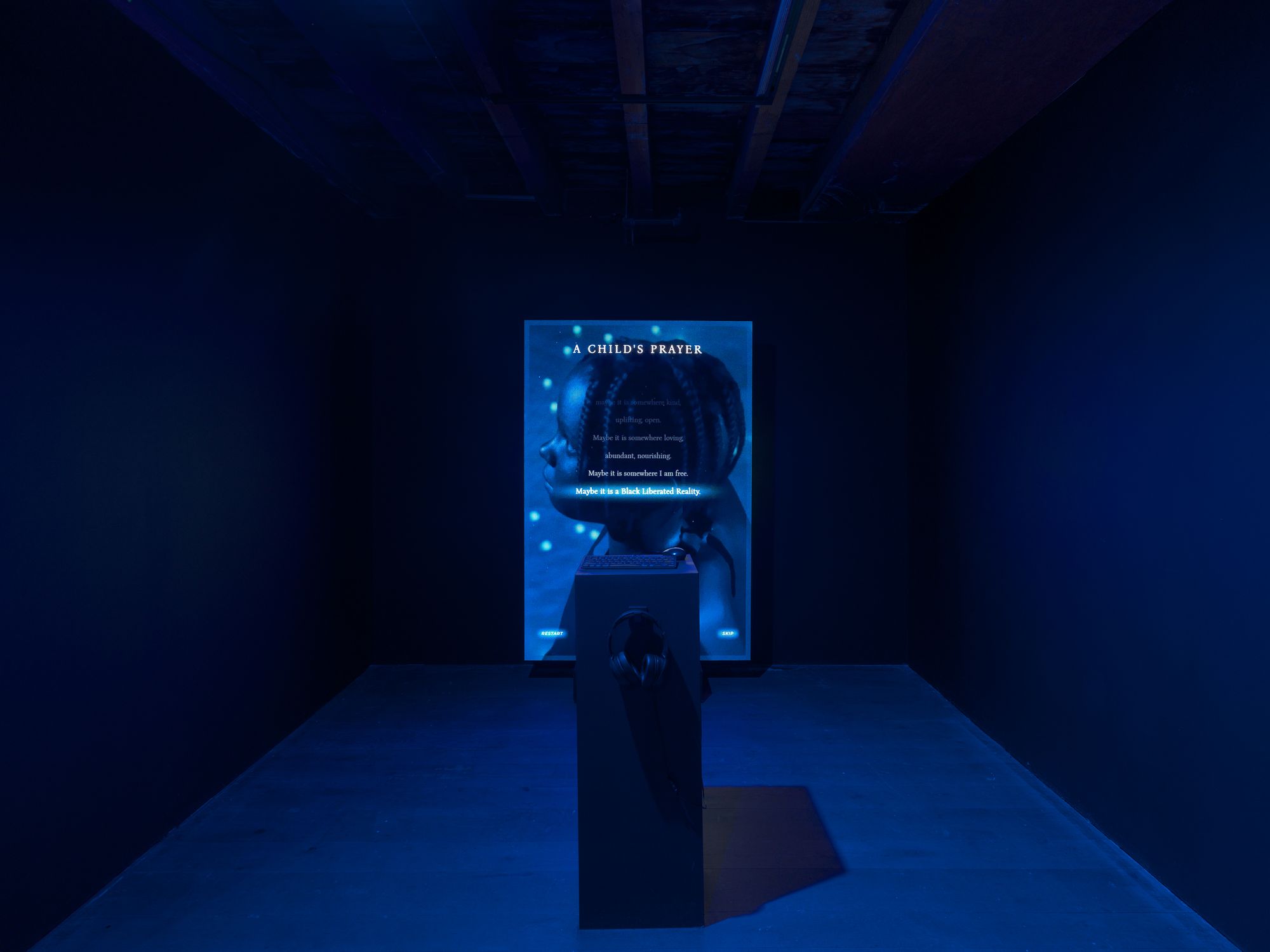
Installation view of LaJuné McMillian, Child/ren of the Bloom, Pioneer Works, 2026.
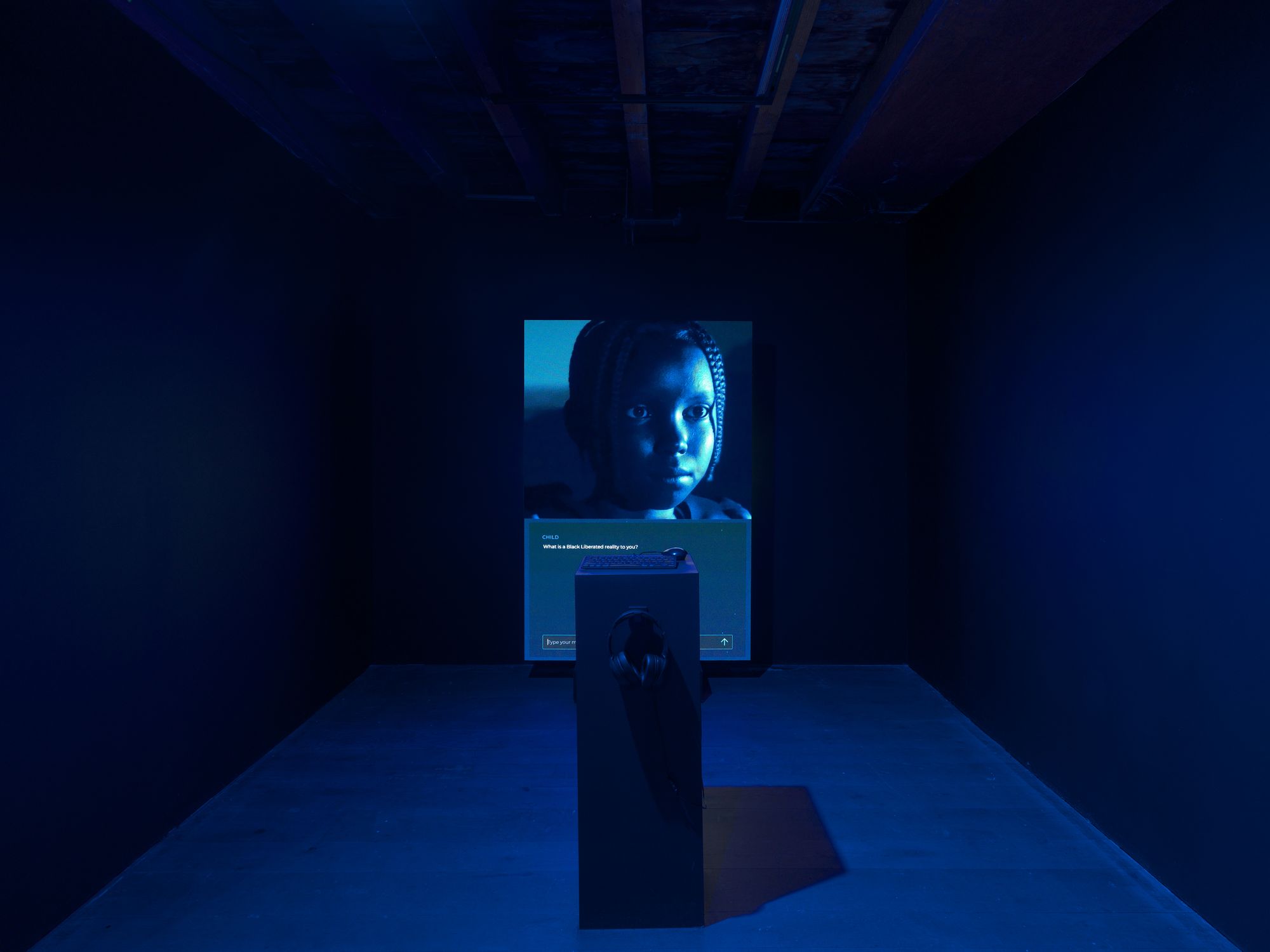
Installation view of LaJuné McMillian, Child/ren of the Bloom, Pioneer Works, 2026.
It’s so lovely and affirming to hear that sometimes the more courageous thing is to recast yourself into your own mythologies and not shy away from the bodies and voices that in other spaces are cast as unworthy or unideal.
I think being an artist is a very generous thing. What is the experience you hope we’ll have when we walk through this installation? What do you hope we’ll feel?
There’s a transformation prayer embedded in the installation. We are at a time in the world where we are in need of radical transformation on individual and collective scales. Through the power of prayer, the power of movement, and the power of technology, I wanted to remind people that we all have agency and power to go through that transformational change. The prayer is also reminding us that spirit is walking with us. It’s asking, who do we need to become?
I'm trying to be really honest. In my process as an artist, I'm really trying my best to put myself in the process of moving through that portal myself. I'm documenting that journey through the artwork.
My future self is involved, and I call them the portal's keeper. I’m projecting that version of me 10 years from now, so I'm giving myself some time.
It's not today, it's not tomorrow.
But also, like, get it together, LaJuné. I be wilding out. I'm not even gonna lie.
Ten years is good.
Yeah. Ten years from now, I'ma be doing something, you know? But seeing myself in the future as an avatar has been really healing for me because when I was a child I didn't know I'd still be here. So I'm just like, "Oh, wow, I'm still here, and I'm gonna be here in the future."
There's a pragmatism to it, but transformation can also be a leaky and sort of mysterious and mystical process. I love that you have these iterations of spirit and of otherworldly things that we cannot materially touch.
For the decade right before and right after the Obama presidency, there was a lot of momentum around Afrofuturism, but we've kind of abandoned that a bit. I’m curious about how it shows up in your work or in your thinking.
The term came up for me first in 2021 when I did a really cool, live mocap projection on the Brooklyn Public Library. I looked up at the building, and I was like, "Wow, I'm building these portals to Black liberated realities." I had all these live motion capture performances, and I was changing the visuals in real time. The word “reality” came up because [in the artwork I made], my friends were performing, they were moving, they were free, they were liberated.
In working with my collaborators and my friends, there have always been moments of liberation that I've been able to feel in the moments where I'm in process, in practice, and I'm creating with the people that I love. I feel so liberated. I feel so free. Sometimes I come out of that experience and I'm just like, "I just wanna be there all the time."
I've just always wanted to be free. And I’ve felt it, so I know it exists. But it sucks when you turn around and life does its thing, and it’s just like, "Oh, now you're back."
How do you extend that reality is the question, right?
Exactly. That's what all of these series of artworks are doing for me. And in using that term liberation, it's not to say, "Oh, we're now without duties." Or “We're now without work to do."
Yeah. I think liberation is about a commitment to each other. Going back to the phytoplankton, it’s a self-sovereignty that allows you to be committed to life together on this planet.
What is life for if you’re not in community and dutiful to a larger project?
In the animation of my avatar walking into the ocean, there's a piece of my prayer where I'm like, "Oh, let us remember these children. Hold them close, close to us and cover them, and relieve them from the version of the world that has no issue in their demise. Let us be returned to our mothers and give us back our children."
It’s about returning to the version of the world that loves us, that's in reciprocity with us. What version of reality do we need to destroy in order to return back to nature, to each other, and to ourselves? ♦
Subscribe to Broadcast