
The future Pioneer Works Observatory represents a celebration of culture for all. In nineteenth-century America, astronomical observatories had become something of a craze. Despite an intriguing history of bold attempts to manifest a grand observatory in the bustling metropolis around Brooklyn and Manhattan, none succeeded. In 1847, leading Brooklynites declared they would build in haste an observatory superior to any in the world. That ambition did not come to fruition. A hundred and eighty years on, the Pioneer Works Observatory will mark the culmination of this history with New York City’s first public observatory.
Both a museum-quality artifact and a working instrument, the telescope—and the aspired observatory—represents an enduring belief in the transformative power of knowledge and public access.
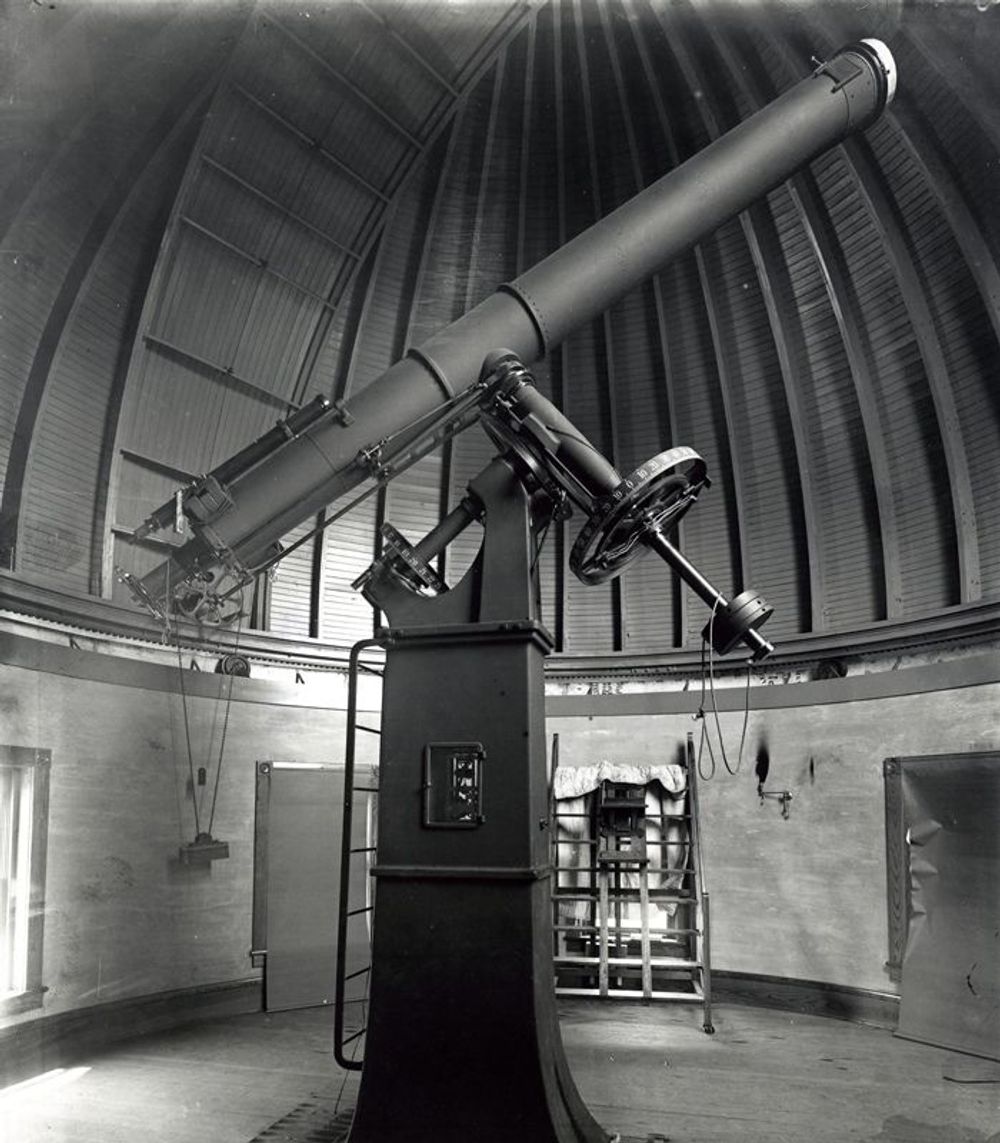
1895 Refractor Telescope
Built by Warner & Swasey Co.
The centerpiece will be the restored telescope of exceptional provenance, commissioned at the peak of telescope manufacturing in the 1890s by the New York benefactor Emerson McMillin. The instrument was in use for decades at Ohio State University before moving to Ballreich Observatory, and ultimately, over the eons, falling into disrepair. Bart Fried, the former President of the Antique Telescope Society, found the telescope and shepherded its recovery and transfer to our care. The instrument was meticulously restored by Alan Sliski & Sons before arriving at Pioneer Works in 2025.
The telescope retains the original hand-ground lenses and mechanicals traceable to their famed manufacturers. The white optical tube, built by Warner & Swasey, is displayed alongside its original 12.5-inch lens crafted by master optician John A. Brashear. The elements are a testament to the precision of the era’s mechanical engineering. Though not on display, we also retain the original eight-ton cast-iron mount and pier, which stands 12 feet high. The length of the telescope tube, affixed to the top of the functional mount, spans nearly fifteen feet.
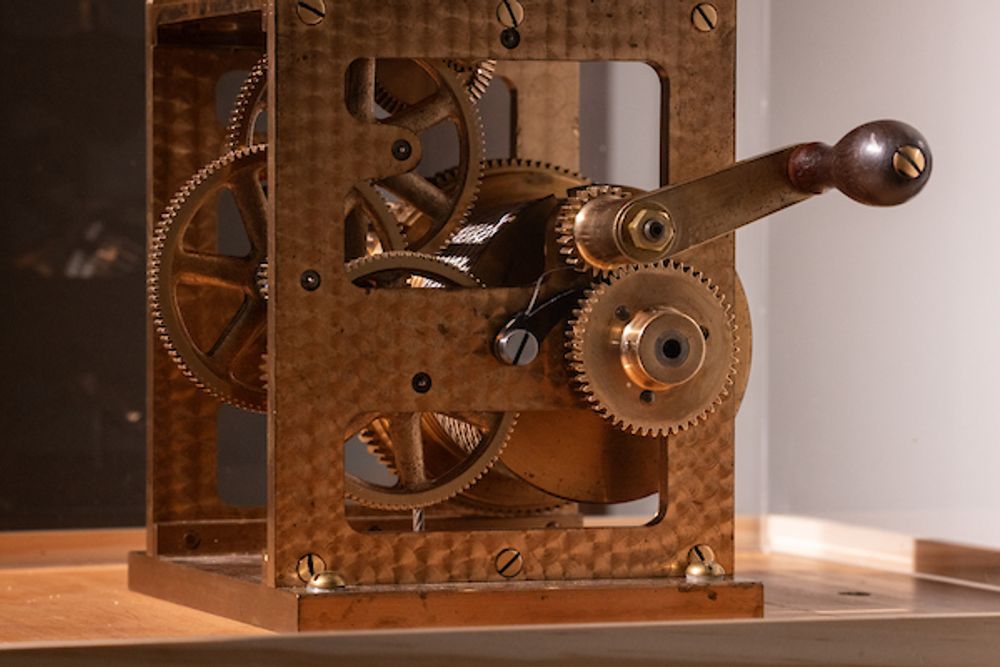
Clock Drive of the Pioneer Works Telescope
Built by Warner & Swasey Co.
This weight-driven clock drive keeps the telescope steadily trained on the sky by compensating for the Earth’s rotation. An original component of the 1895 refractor, the tracking mechanism was fully restored by Alan Sliski & Sons before arriving at Pioneer Works. As the Earth rotates, the clock drive counter-rotates the telescope, matching the sky’s apparent motion so objects remain centered in the eyepiece. This spectacular example of mechanical engineering is effectively a precision celestial timepiece.
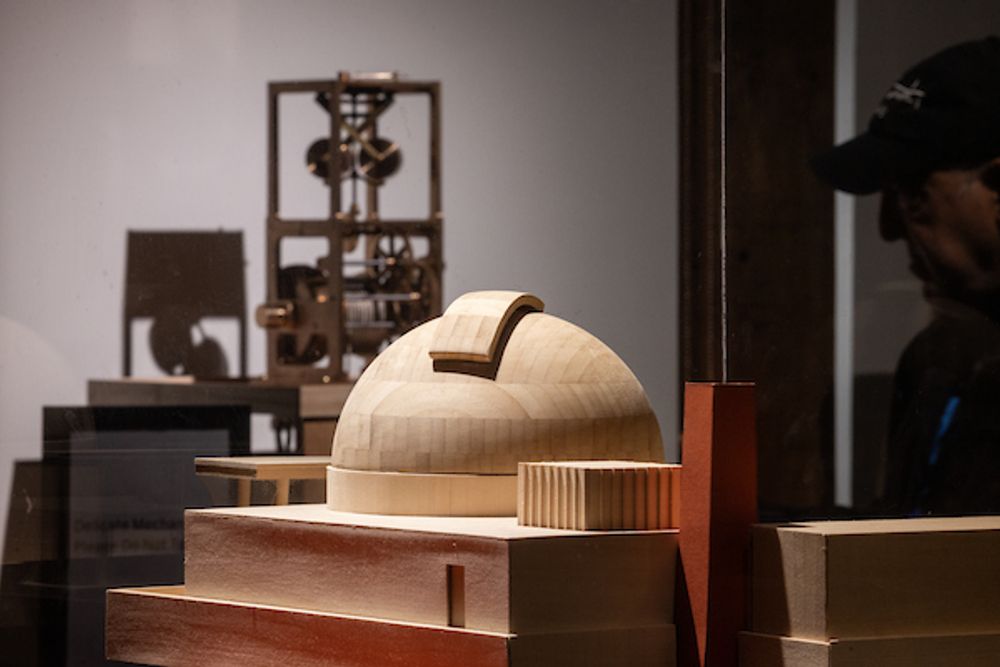
Architectural Model of the Pioneer Works Observatory
Built 2024
This model, designed by Brooklyn-based architecture firm Peterson Rich Office, represents the future Pioneer Works Observatory–slated to be NYC’s first public observatory. The centerpiece will be the fully-restored PW antique telescope built in 1895. The observatory will host both daytime solar observing and nighttime stargazing. Nested on a rooftop deck with a panoramic view of the city, the site will foster education and curiosity while drawing a direct connection between contemporary culture and our celestial heritage.
To support the observatory and read more about the project here.