Lucy Sante's Knots
Lucy Sante, Popularity, 2021. Collage.
Courtesy of the artistI’ve been making collages for close to 60 years, since I was a teenager. I guess you could say that collage-making has been my violon d’Ingres—Ingres, the painter, liked to exercise his unpainterly emotions by fiddling. For me, the work similarly provides another channel for my outsized ambitions. It also answers a permanent need. I had wanted to be an artist since I was a toddler, but I was colorblind and all thumbs. I couldn’t get my drawing to do what I wanted it to do. Collage was a way to make art while skirting my deficits. And collages were very hip in the late 1960s. I noticed Eve Babitz’s collages on the covers of rock albums, and the collages in Rolling Stone by someone who called himself Sätty, and the use of collage by psychedelic poster artists such as Stanley Mouse. And I’d seen Max Ernst at the Museum of Modern Art and thought his collages of the 1920s were as hip as anything out there today. I had scissors, Elmer’s glue, and a sheaf of oaktag. My parents subscribed to Life magazine, and someone had for some reason given us a lot of back issues of Arizona Highways. I made one collage after another. All I can remember of them now is that at least two featured a mushroom cloud, a popular image at the time, and I was very proud to have followed the trend.
I went back to drawing not long after that, and didn’t resume collages until my first post-college job, at a large secondhand bookstore in lower Manhattan. Soon after I started there I was put in charge of the paperbacks, which meant that when the store acquired a library, I would be handed everything that wasn’t a hardcover book to judge and price. The result was a continual flood of collage materials, of every possible sort: magazines, newspapers, maps, posters, technical manuals, programs from the Folies Bergère, South Vietnamese government propaganda, disbound nineteenth-century geographies, entire stamp collections. Furthermore, I now had venues. Many of my friends had formed bands, and I started making collaged gig flyers for them—which also entailed going out and wheatpasting them furtively at night, but then you’d see your work in the streets. And in the run-up to a narrowly avoided strike, my bookstore colleagues and I started a zine, intended as a gripe sheet, that instead came to feature art and poetry. I put in my collages, as well as a collage-and-text series by my pseudonym, Dave Carluccio.
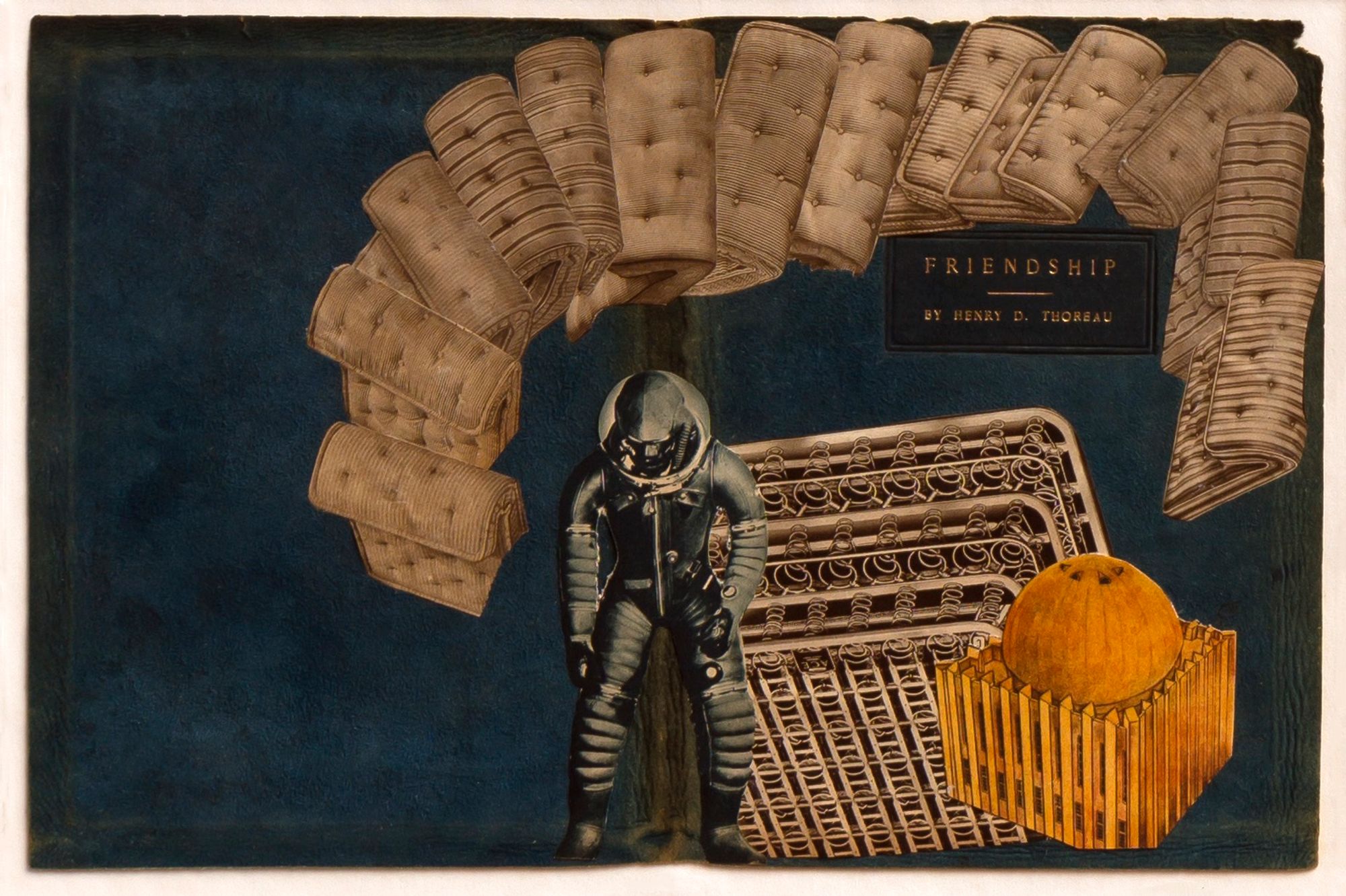
Lucy Sante, Friendship 7, 2020. Collage.
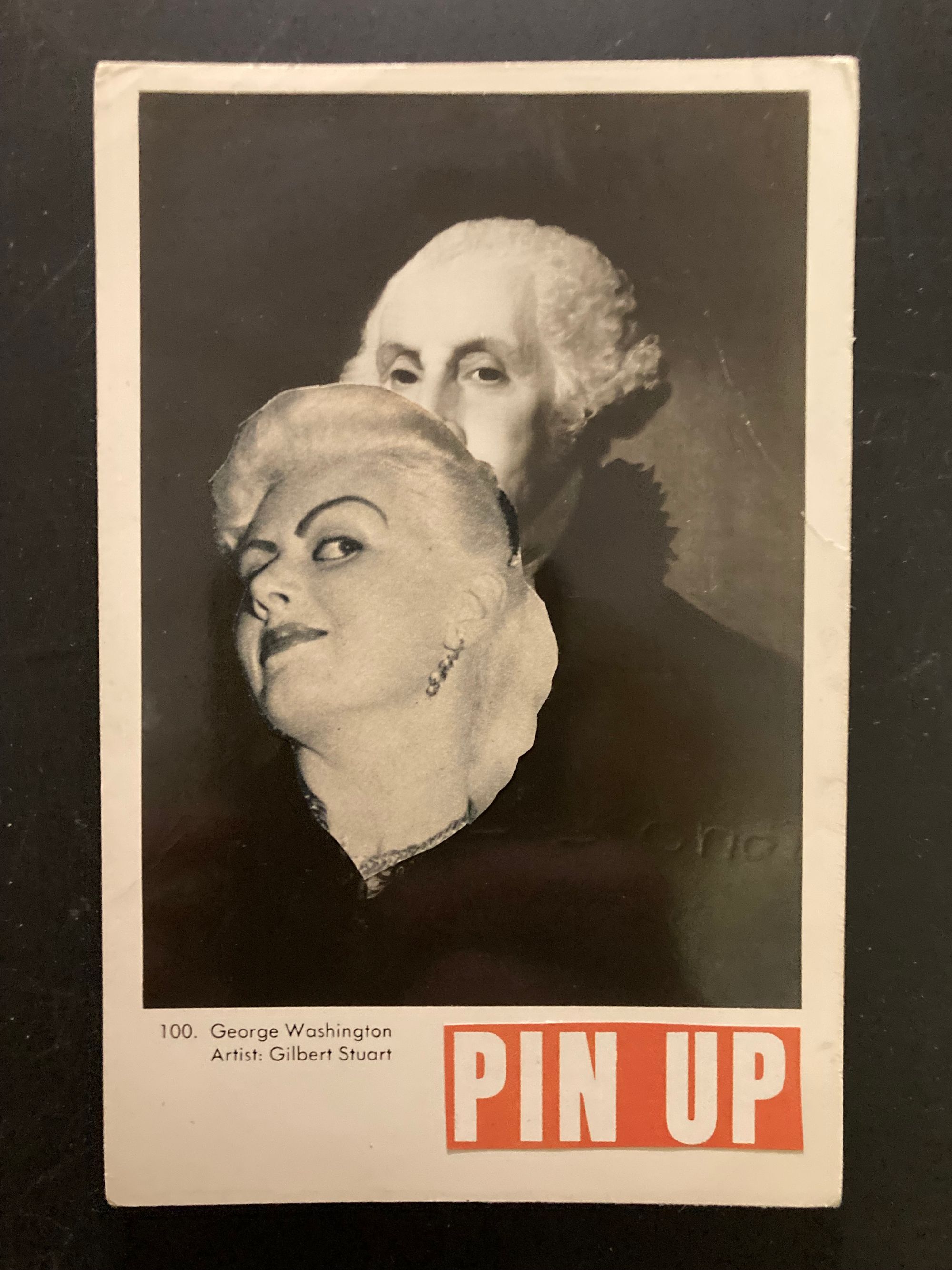
Lucy Sante, PIN UP, 2025. Collage.
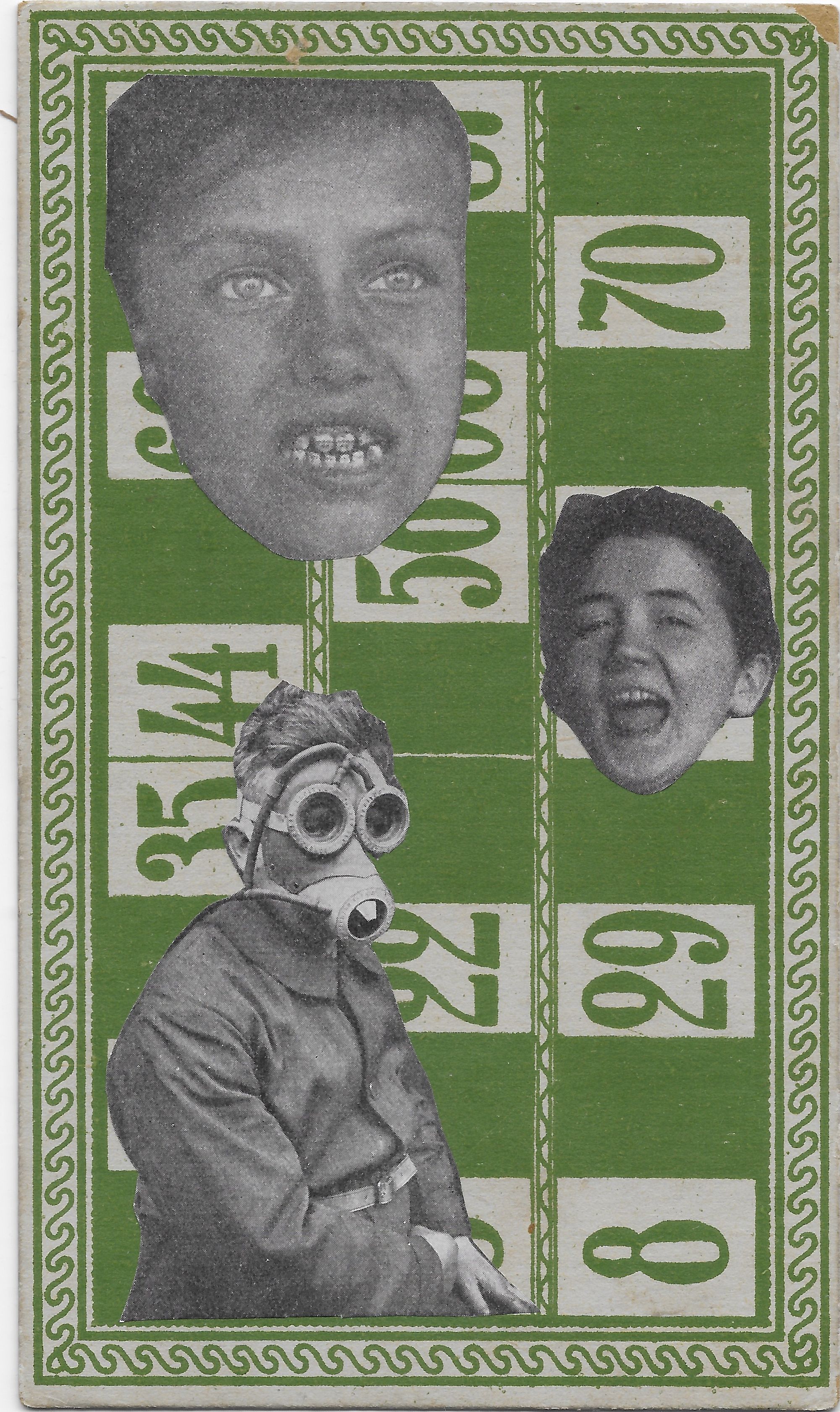
Lucy Sante, Cover for a Series of Crime Paperbacks, Moscow, 1924, 2020. Collage.
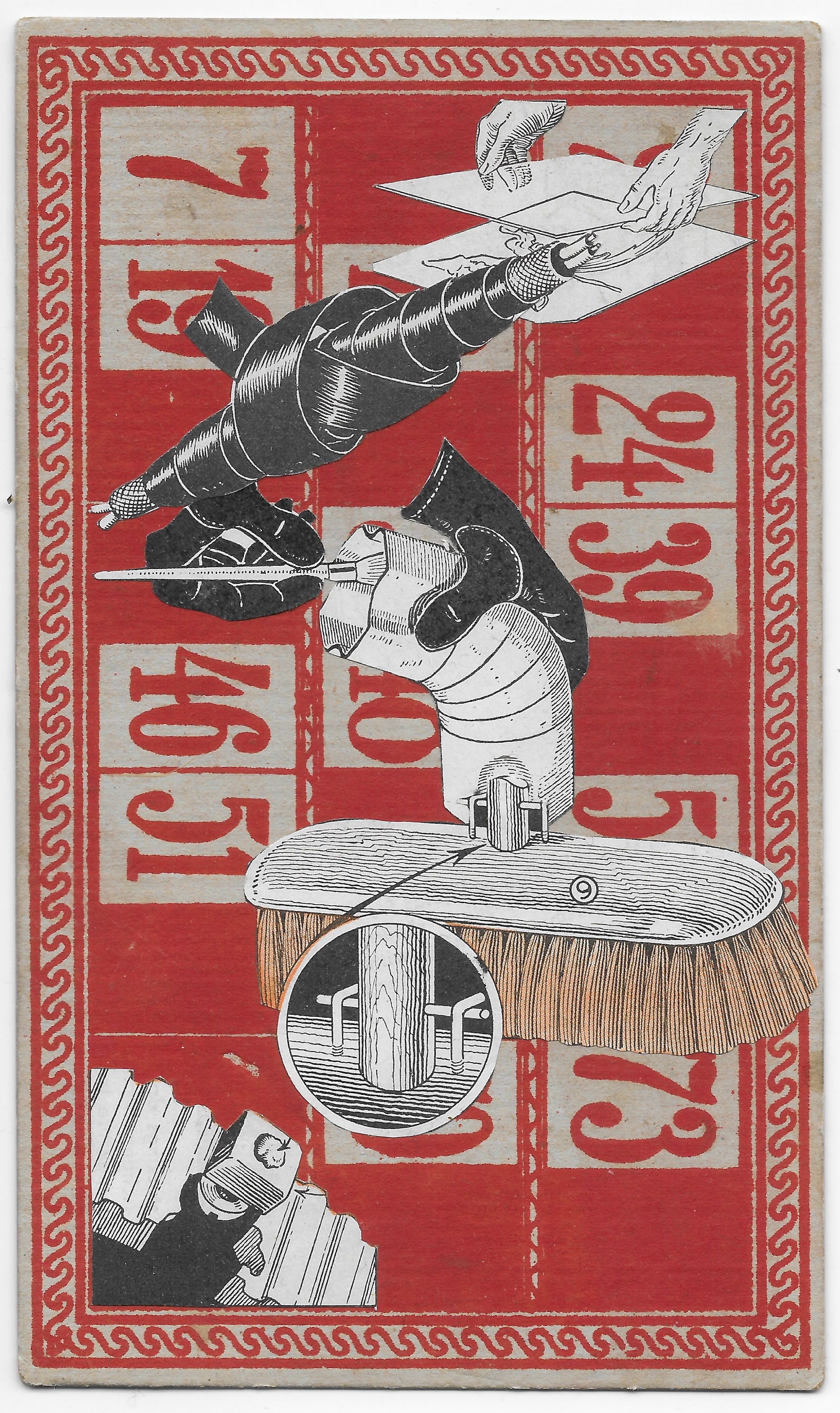
Lucy Sante, Cover for a Series of Technical Manuals, Utrecht, 1919, 2020.
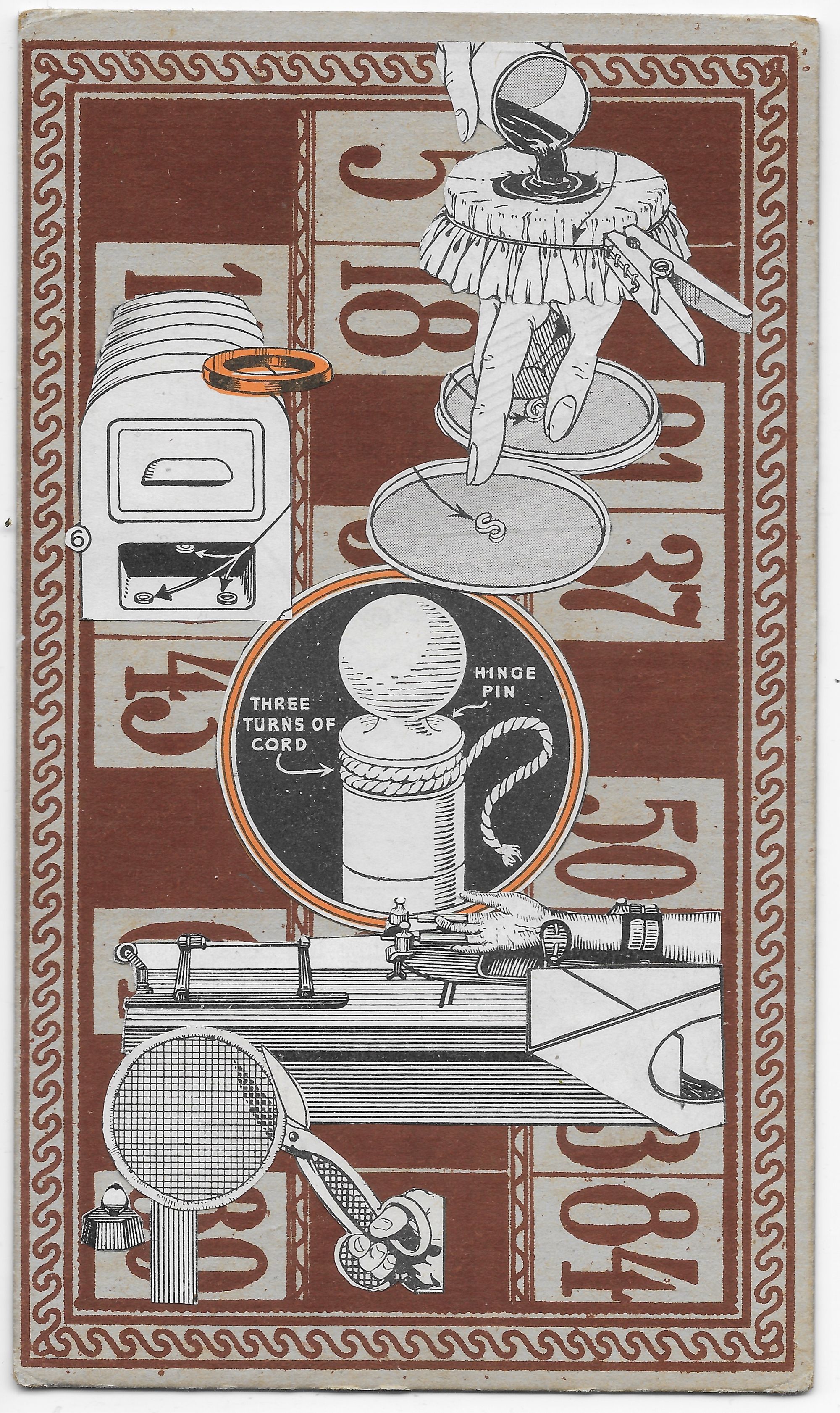
Lucy Sante, Cover for a Series of Technical Manuals, Utrecht, 1919, 2020.
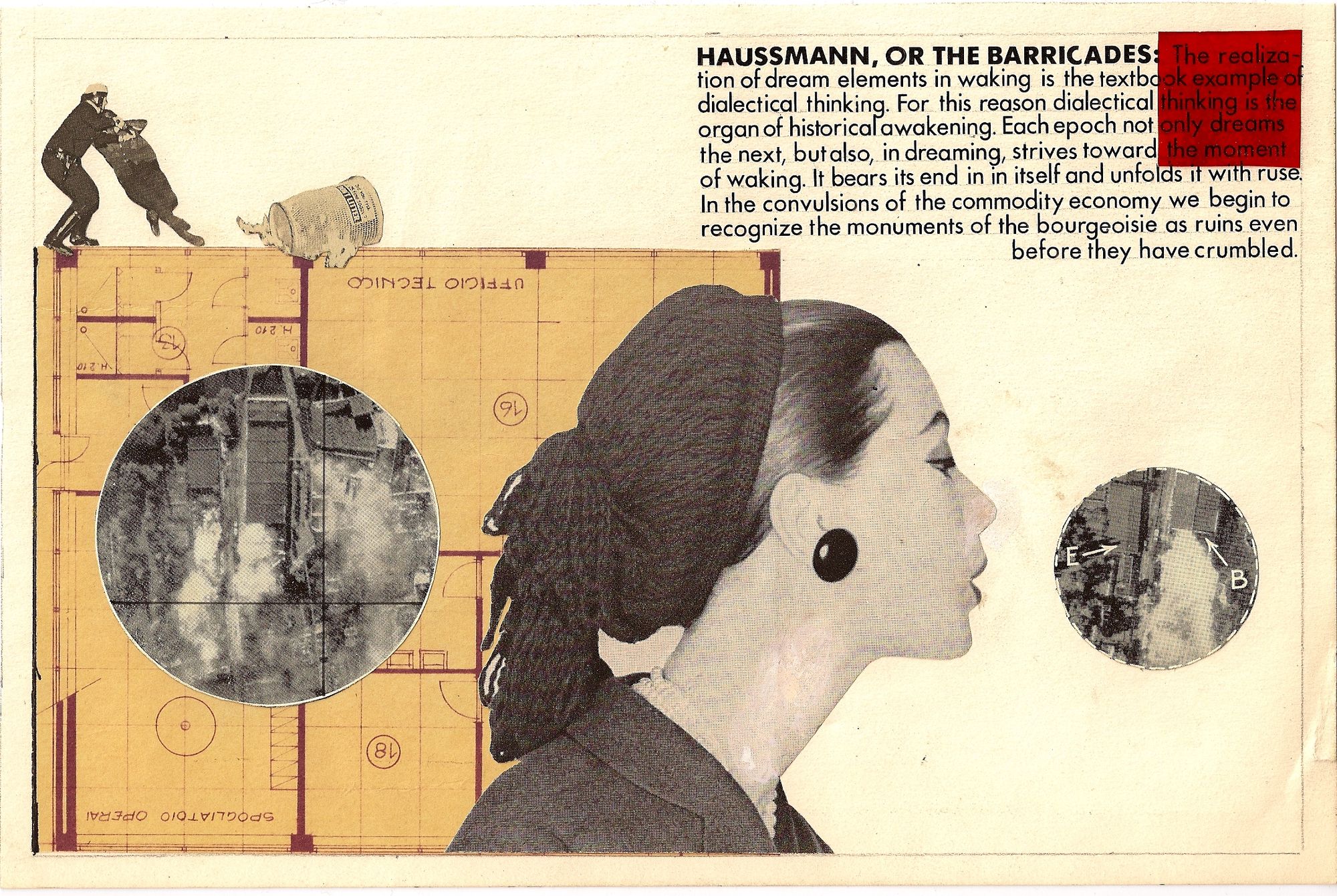
Lucy Sante, Haussmann, or the Barricades, 1979. Collage.
But I quit the bookstore and all the bands broke up and I no longer had a context for making collages, so I stopped, for decades, if begrudgingly. That didn’t prevent me from dragging my stock of materials from one apartment to another, and house to house. (I still have, and sometimes use, paper I acquired at the bookstore 50 years ago.) It was social media that finally brought me back. That and a book-exchange table that my local supermarket had for a while, where I found the damnedest things: German medical textbooks from the 20s, crudely illustrated Spanish pamphlets from the 30s, movie-star magazines from the ’40s. I deplore social media, of course, and the people who own these platforms, but Instagram is about pictures, my weakness, and gathers together many real-life friends. I am guaranteed an audience.
By now I have enough magazines to stock a midtown Manhattan newsstand in the 1950s. I favor imagery going back to the early years of the twentieth century and ending around the time of my birth, which was 1954. (When I was young, I had a theory that one’s clothing tastes were determined forever by the fashions one saw after leaving the womb.) I like a matte finish, and everything after that is too glossy. Also, a certain knowingness comes in; before the 1960s there was a prevailing innocence, visible in the faces in the crowd—as well as the terms in which they were pitched by commerce—that is now impossible to recapture. I also favor fading, foxing, water stains, scorch marks, rips, tears, all the blemishes that mark the distance between that time and our eyes. I grew up in postwar Europe, so before I ever saw movies or television or heard a pop song on the radio, it was magazines and movie posters—which were glossy and imposing until they were shredded and contemptible—which were the chief signifiers of the big world and its drama, that indefinable thing I wanted to escape to from an early age.
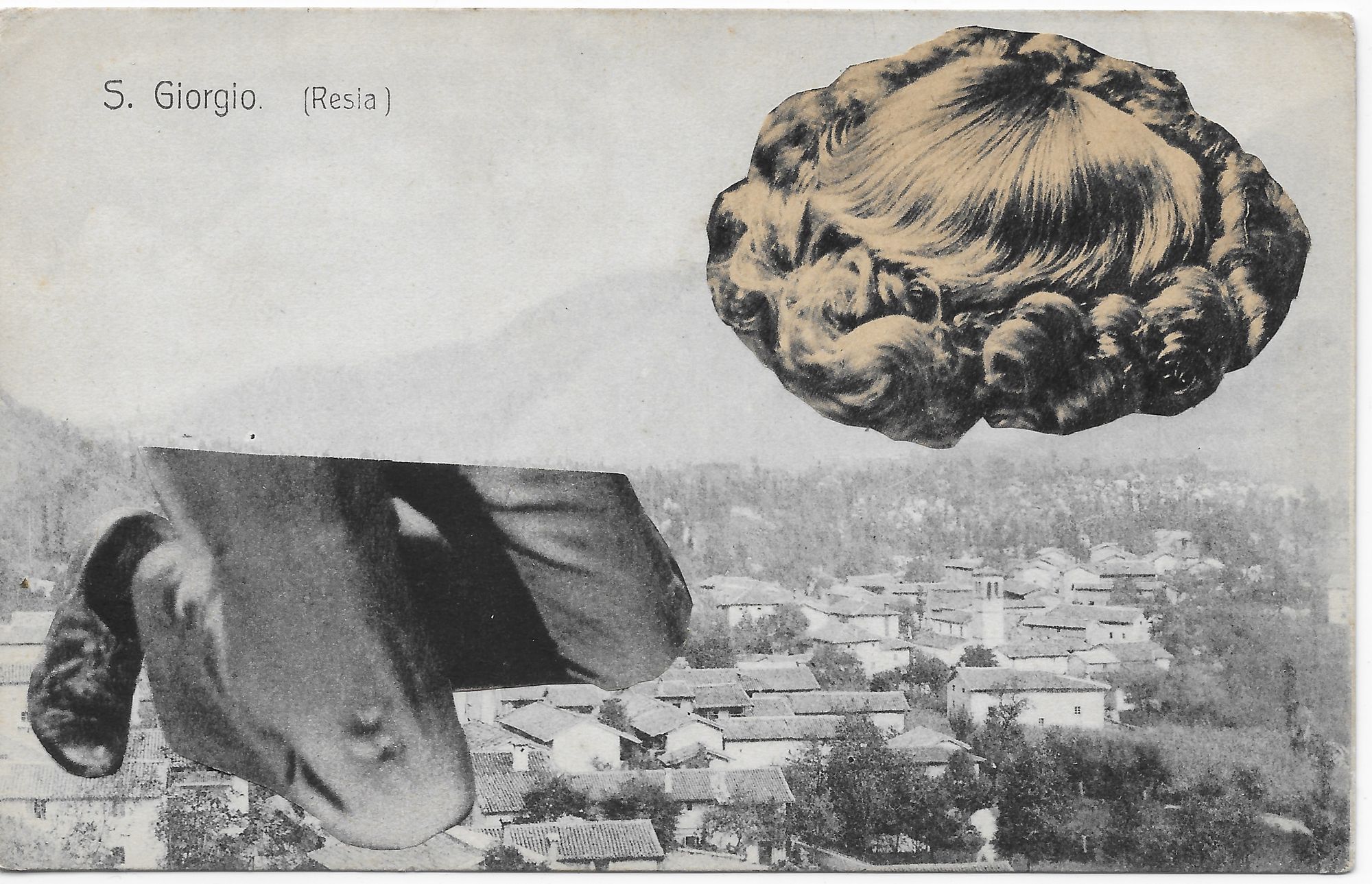
Lucy Sante, S. Giorgio, 2020. Collage.
Courtesy of the artist and Picture Theory, New YorkNow and then I’ll also dabble in nineteenth-century engravings, but the truth is that between them, Max Ernst and Bruce Conner sewed up that field once and for all. I am in thrall to the collage tradition. The earliest work I know hangs in my house, a long-ago wedding gift. Against a midnight-blue backing dotted with stars, a tangled web of foliage entwines various cavorting mythic figures, including two by William Blake and one by John Flaxman, strangely streaked here and there with long drops of blood. It is dated 1860 on the back and attributed to John Bingley Garland, described as “an English clergyman,” who was nothing of the sort. (An album of 43 of his collages, known as The Blood Book, was once owned by Evelyn Waugh.) And then, running along the walls of the gallery in my mind, are Marcel Duchamp and Joseph Cornell and Valentine Hugo; Aleksandr Rodchenko and El Lissitzky and László Moholy-Nagy; Hannah Hoch and John Heartfield and Kurt Schwitters; Wallace Berman and Jess; Gil J. Wolman and Jean-Louis Brau and Guy Debord; Joe Brainard and Robert Rauschenberg; Tadanori Yokoo; Jean-Michel Basquiat and Richard McGuire.
I think of my collages as posters, no matter what size they are. Since they are often dominated by a word or a phrase, they could be advertising imaginary movies or bands—or perhaps less tangible attractions. Simplicity is always the best bet, so I like to work with as few elements as possible: word, background, figure; I’ve made collages with only two ingredients. Much like writing, making collages involves drastically using up options: 50 percent with the first item, 25 percent the next, and so on. The ideal result is something tight, inexplicable, and inexplicably tight. I enjoy the challenge of making an object that can be consumed by the eyes with no thought involved, and at the same time introduce a thought that lies just on the edge of meaning, preserving maximum ambiguity. ♦
Copyright © 2026 by Lucy Sante. Excerpted by permission of American Academy of Arts and Letters. All rights reserved.
Subscribe to Broadcast