Big Apple Sky Calendar: April, May, June 2026
Jupiter's auroras, as seen through the James Webb Space Telescope, 2022.
Photo: NASAIn the 1990s, astronomy professor Joe Patterson wrote and illustrated a seasonal newsletter, in the style of an old-fashioned paper zine, of astronomical highlights visible from New York City. His affable style mixed wit and history with astronomy for a completely charming, largely undiscovered cult classic: Big Apple Astronomy. For Broadcast, Joe shares current issues of Big Apple Sky Calendar, the guide to sky viewing that used to conclude his seasonal newsletter. Steal a few moments of reprieve from the city’s mayhem to take in these sights. As Oscar Wilde said, “we are all in the gutter, but some of us are looking at the stars.”
—Janna Levin, Broadcast co-editor-in-chief
April
April 1
Sunrise 6:39 am EDT
Sunset 7:20 am EDT
Full Moon at 10:11 pm EDT. The bright star next to the Moon tonight is Spica.
Until the year 1582, when Pope Gregory reformed all the calendars of Catholic Europe, April 1 was considered the beginning of the year. Or purists might say it was March 25—the traditional date for the vernal equinox.
April 2
The release date, in 1968, of 2001: A Space Odyssey, a film by Stanley Kubrick and Arthur C. Clarke. Usually ranked as the greatest science fiction film of all time, and often as one of the 10 best films of all time. I think I've seen it 10 times, including the opening night in Boston, and couldn't count the number of hours I’ve spent discussing it with friends. Clarke's imagination and knowledge, coupled with Kubrick's subtlety and use of imagery, produced an absolute masterpiece.
April 2–3
Mercury is now at “maximum western elongation” from the Sun—as far west from the star as it ever gets (27 degrees), and therefore visible in the morning sky. However, it’ll have to compete with Venus for visibility... and that’s never a fair fight. Any bright planetary object you see these mornings, low in the eastern sky, will likely be Venus.
April 5
Easter Sunday. Easter is a “moveable feast” holiday, because it is pegged to the full Moon, rather than a calendar date. It’s always the first Sunday after the first full Moon on or after the vernal equinox.
April 7
On this day in 2001, the Mars Odyssey mission was launched to search for water on Mars. This and other missions have now shown some evidence for the existence of subsurface water on Mars, and simple photography appears to show dried-up river canyons. As the Planetary Society puts it: “Mars isn't the greatest place to quench your thirst, although it may have been a few billion years ago.”
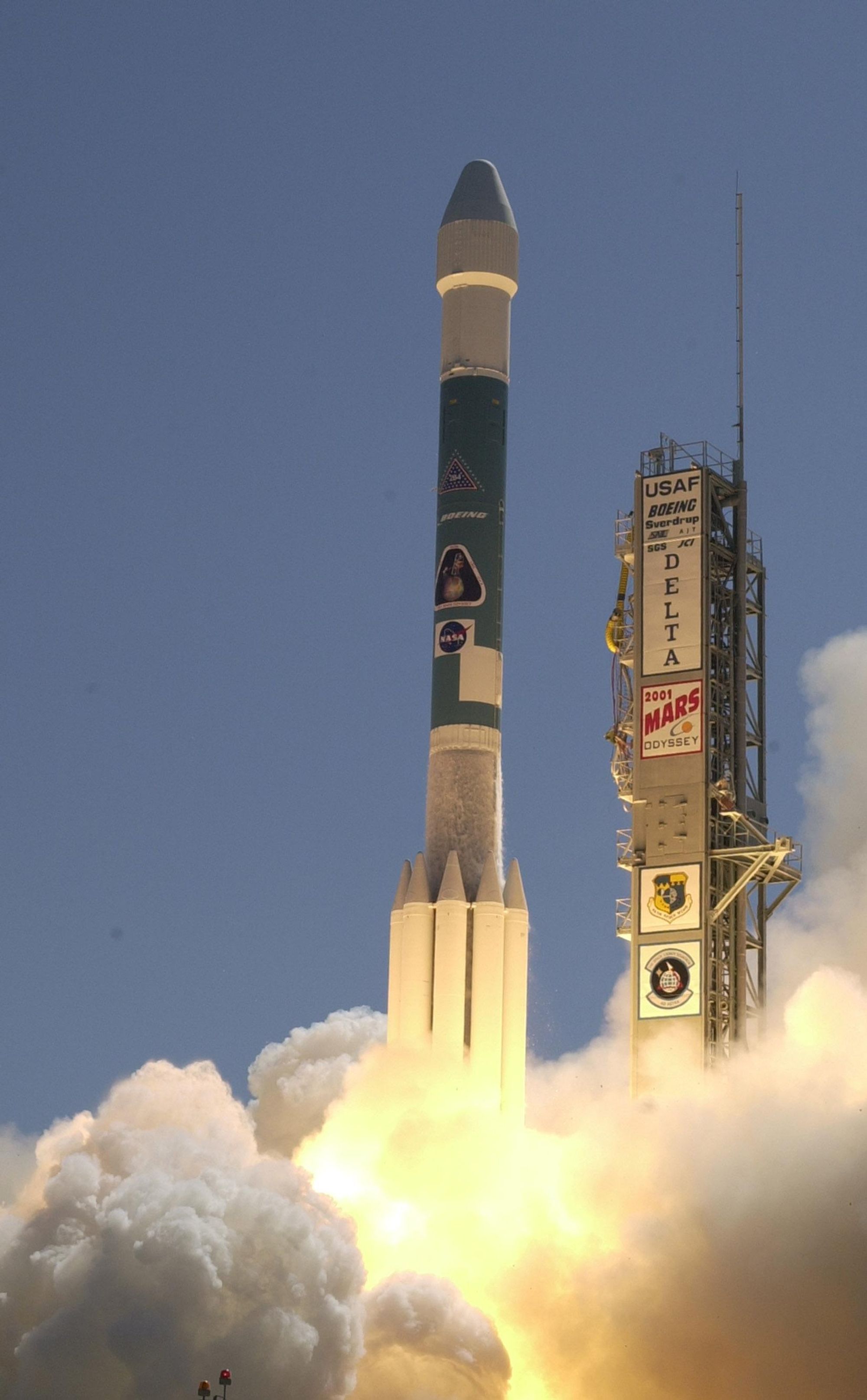
The Boeing Delta II rocket, launching the 2001 Mars Odyssey spacecraft to orbit Mars.
Photo: NASA/KSCApril 10
Last-quarter Moon.
On this day in 2019, NASA and NSF revealed the first image of a black hole—specifically, the supermassive black hole at the core of the massive galaxy M87. This was accomplished by the Event Horizon Telescope (EHT), a worldwide collaboration of radio telescopes—which agree in advance to observe the same targets at exactly the same time (and thereby simulate a telescope thousands of miles in diameter). The principle is similar, but not identical, to that which we all know as binocular vision.
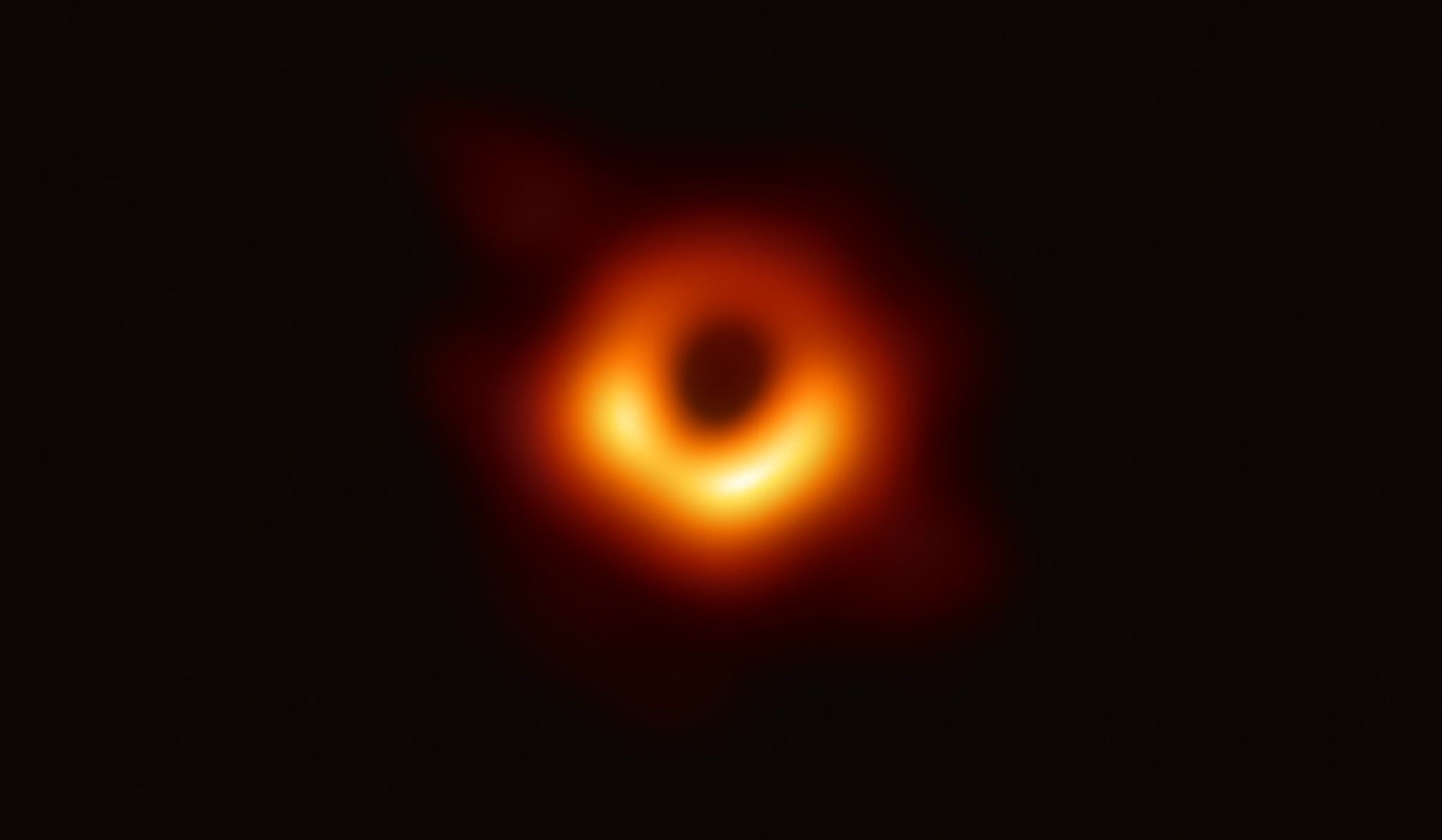
EHT photo of the M87 black hole.
Photo: Event Horizon Telescope CollaborationApril 11–12
On these two days, the Northeast Astronomy Forum (NEAF) will be held at Rockland Community College. Imagine a large gymnasium full of the latest stuff from just about every vendor roughly connected to astronomy (telescopes, toys, clothing, books, et cetera) and dozens of talks. Every imaginable price range, for every imaginable taste. I recommend bringing more $$ than you think you’d spend.
April 12
In 1961, the first human (Yuri Gagarin) orbited the Earth on this date. He came down safely, to a hero’s welcome, but died a few years later in a plane crash. Those were dangerous years for astronauts, and even more so for their dog and chimpanzee cousins.
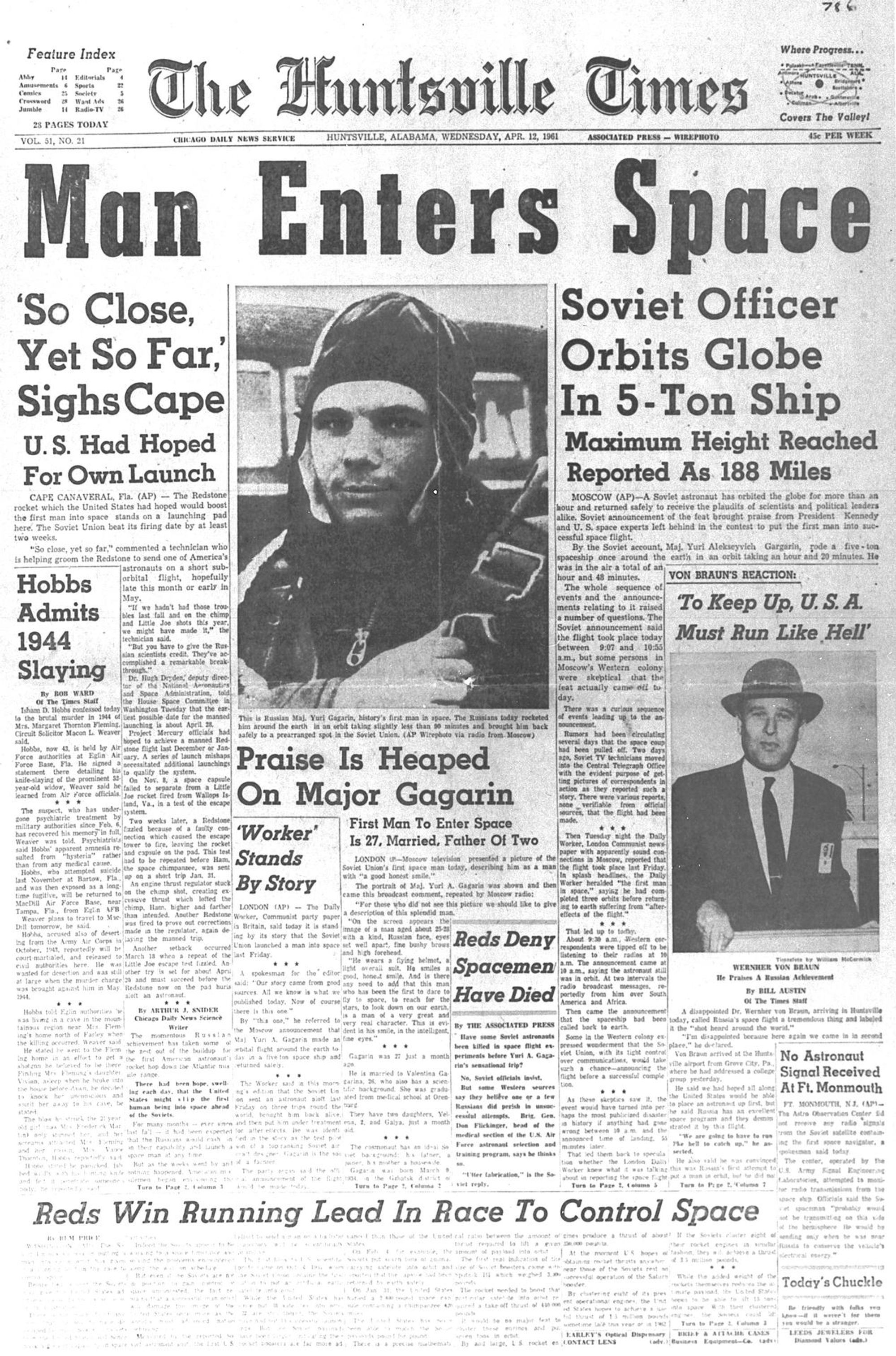
The front page of the Huntsville Times from April 12, 1961.
Photo: NASAApril 13
Last-quarter Moon, rising around midnight.
Mid-April
In the year 1006, one of the great supernovae occurred—the oldest in European history—in the constellation Lupus (the Wolf). Observations were reported from Europe, Africa, and China. The star was many times brighter than Venus, and remained visible throughout the year. Today it is known as SN 1006, and the ejected shell is extensively studied at radio, optical, and x-ray wavelengths. Despite the prominent shell, no central object (a compact remnant of the supernova) has ever been detected.
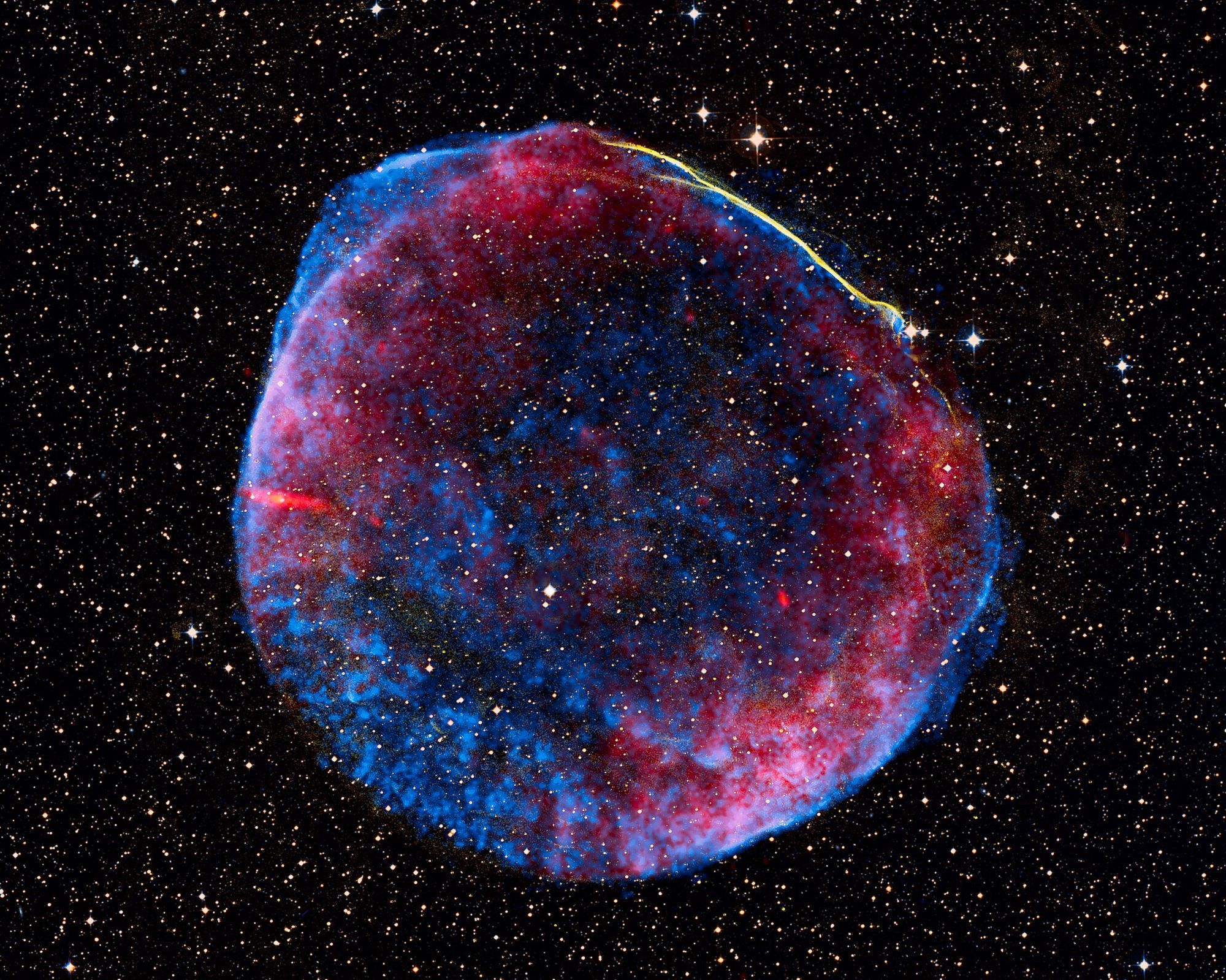
The hot remains of a 1,000-year-old supernova, or its remnants, about 7,000 light-years from Earth. Captured in false-color by NASA’s Chandra X-ray Observatory.
Photo: NASA/ESA/and Z. Levay (STScI)/Middlebury College/F.WinklerApril 17
New Moon at 7:51 am EDT
April 18
The International Space Station makes two favorable (well-timed for observing) overpasses of NYC during April. These are on April 19 from 5:39–5:46 am EDT (traveling from southwestern sky towards the northeast), and on April 21 from 4:56–5:01 am EDT (from west to northeast).
These only last ~six minutes, so don’t sleep late… and don’t mistake the ISS for a plane! It moves at 18000 mph, but is 100 miles higher up—hence whywhy its rate of motion across the sky looks pretty similar.
April 18–22
Whoa! A BIG pile-up of bright objects in the evening sky. Venus is the brilliant object you’ll see in the west throughout April (and May). The thin-crescent Moon zips past Venus on the evenings of April 18 and 19—look low for “the old Moon in the New Moon’s arms.” By the 20th and 21st, the Moon starts to menace Jupiter, higher in the western sky.
For people new to stargazing, here’s a puzzle: how can a portion of the Moon NOT get illuminated by sunlight? If you look at it, you might guess right. No, it’s not that the lunar atmosphere is thin (the Moon has no atmosphere at all).
April 22
Immanuel Kant's birthday in 1724. Before wandering off to become the greatest philosopher since Aristotle, the young Immanuel was fascinated by astronomy, and wrote a very insightful book about galaxies (or "nebulae", as they were then called). He thought they were each vast collections of stars—much like the Milky Way, but at great distances. A century later, astronomers would vehemently argue over this; indeed, it was the most vexing issue of their time (see the Shapley-Curtis debate, discussed below). New telescopes in the 1910s–20s proved that young Immanuel had it right all along.
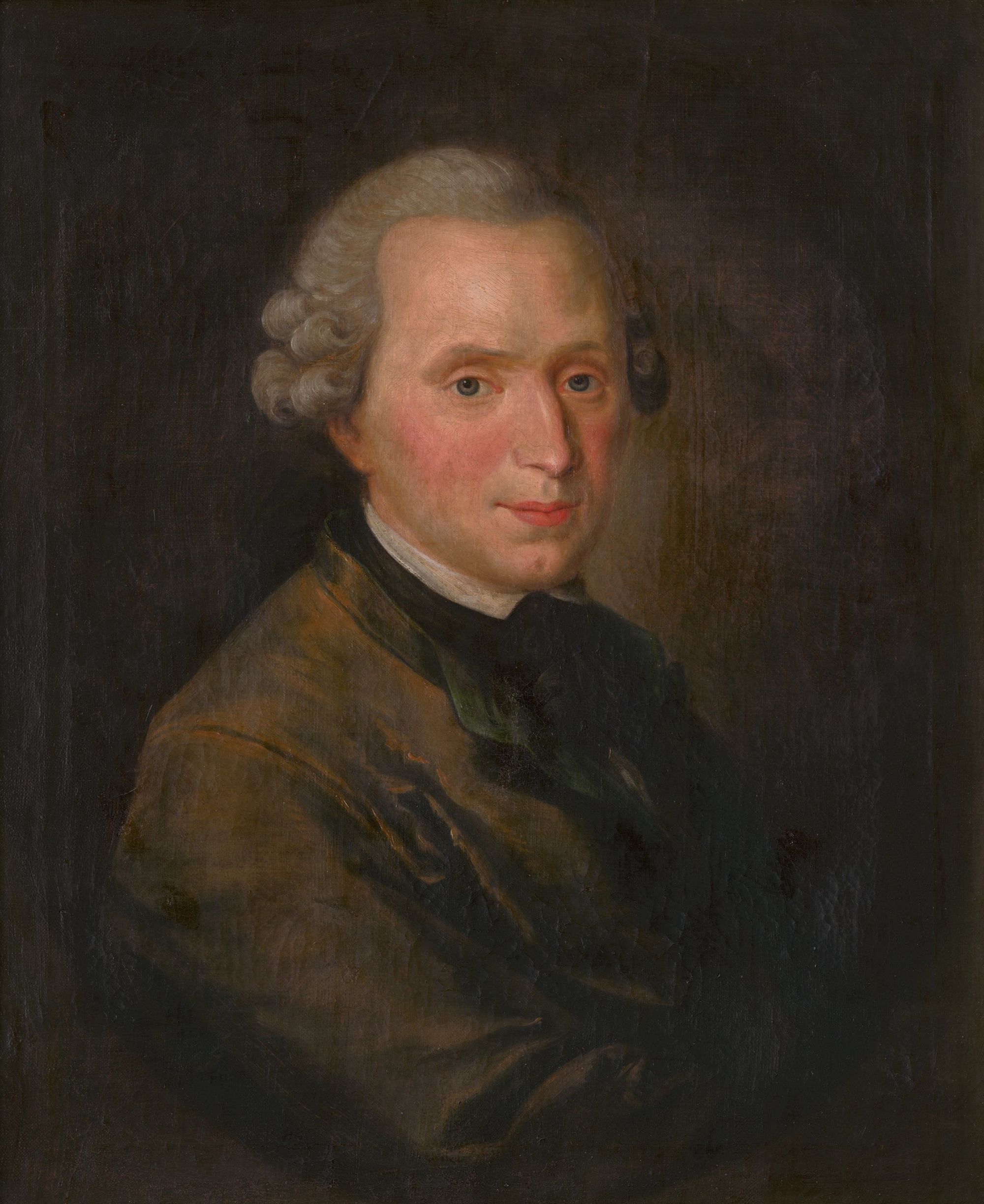
Immanuel Kant, painted by Johann Christoph Frisch, c. 1770.
Courtesy of Wikimedia CommonsApril 23
First-quarter Moon, high in the evening sky and just north of Jupiter.
April 24
On this day in 1990, amid much hoopla, the Hubble Space Telescope (HST) was launched. To NASA's great embarrassment, the first images showed that the optics of the mirror were flawed—the images were fuzzy! Good for cartoonists, but bad for astronomy. Fortunately, the telescope was actually designed to be visited by astronauts... and an early visit managed to fix the flaw. For the next 36 years (and counting), the telescope has been a workhorse instrument for astronomers of all nations.
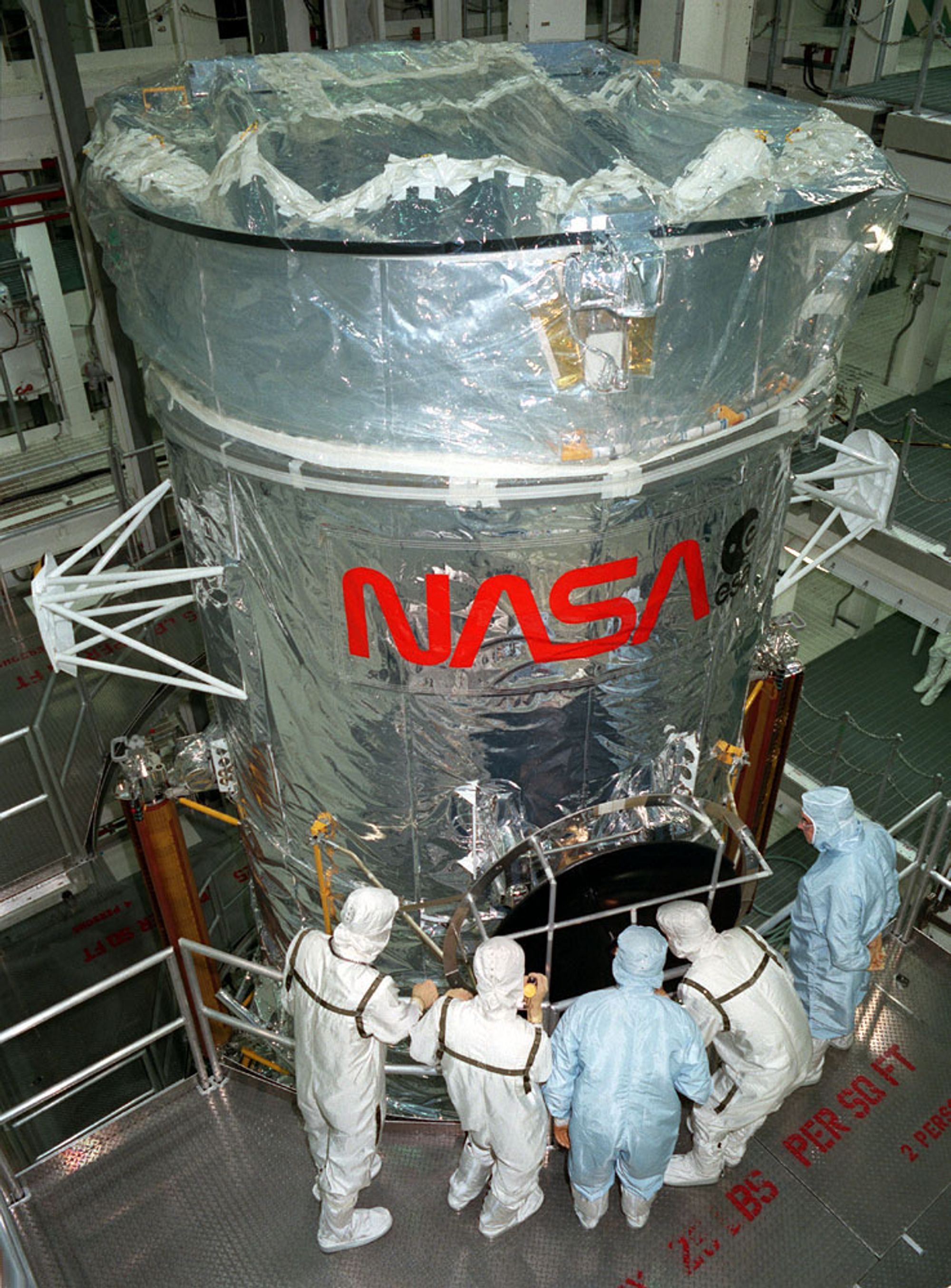
The Hubble Space Telescope (HST) in the Vertical Processing Facility (VPF) support fixture during final testing and verification, 1989.
Photo: NASAFrom 5–9 pm, AAA (Amateur Astronomers Association) will host their Star Party on board the U.S.S. Intrepid at Pier 86. See their website for details. Come early if your main interest is the aircraft carrier, or late if it’s the party. Remember, the Sun sets late in late April.
April 26
On this day in 1803, thousands of stones fell on the small French village of L'Agile. For the preceding few decades, there had been an active debate: Do “meteorites” come from the heavens (beyond the Earth), or are they some kind of terrestrial (“meteorological”) phenomenon? The young scientist Jean-Baptiste Biot traveled to the region, collected samples, interviewed eyewitnesses, and presented a convincing case: They come from space, presumably the solar system.
Individual humans and small human artifacts are mighty unlikely targets for incoming meteorites. But there are recent and well-proven cases of a human (just one) and a car (just one) being hit. They make for fun reading. Just for jollies, look them up! Very few meteorites (714, the same number of home runs hit by Babe Ruth) seem to come from the Moon, rather than interplanetary space. You can actually buy one, but they might cost as much as home runs hit by Babe Ruth.
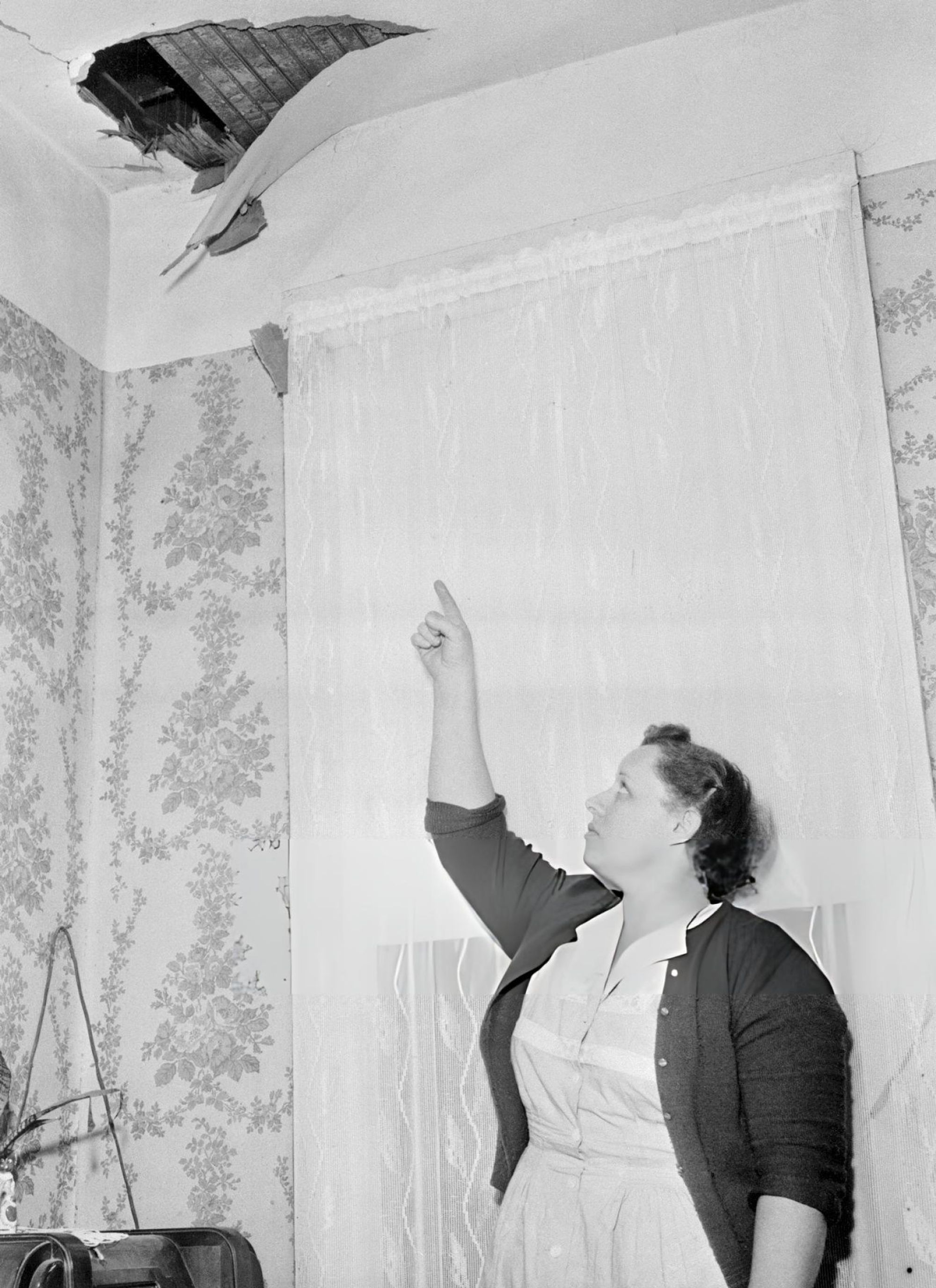
Ann Hodges in 1954, pointing to the hole in her ceiling where a meteorite broke through, bounced off a radio, and struck her thigh—making her the only confirmed person in history to have been directly hit by a meteorite and survive.
Photo: United Press InternationalOn this date in 1920, the famous Shapley-Curtis Debate occurred before the National Academy of Sciences. Heber Curtis of the University of California said: They're large systems of stars, very much like the Milky Way but at great distances. Harlow Shapley or Harvard argued: Nope, they're just what they look like. They’re little smudges of gas and stars in the only real Galaxy that exists, the Milky Way. The new observations of the 1920s proved emphatically that Curtis was correct, and that many of the little smudges are "island universes" at great distances. (Side note: neither seem to have referenced Kant. Broaden your reading, guys.)
April 30
Sunrise 5:55 am EDT
Sunset 7:51 am EDT
May
May 1
Sunrise 5:54 am EDT
Sunset 7:52 pm EDT
Full Moon 1:23 pm EDT. The first of two in May! Quiz: How often does that occur?
May 5
In this morning’s sky (night of May 4–5), the Earth intersects the orbit of Halley’s Comet. Not the actual comet—that would be a spectacle!—but the ORBIT of the comet. The comet has been shedding debris, especially when it nears the Sun and heats up, for at least 1,500 years. That debris—little dust particles—stays in orbit around the Sun. Like the character “Pigpen” in Peanuts cartoons, the dust just follows the comet around. And the Earth intersects that orbit every May 4–5, causing a meteor shower (called the Eta Aquariids, named for the star they appear to emanate from) as the dust burns up in the atmosphere. Despite the two impressive names (“shower” and “Halley”), this event is usually a yawner. April–May mornings tend to be cold, and they don’t usually offer much reward for that discomfort (except for one April morning in 1775). But if you happen to be stargazing this morning, you might see some meteors anyway.
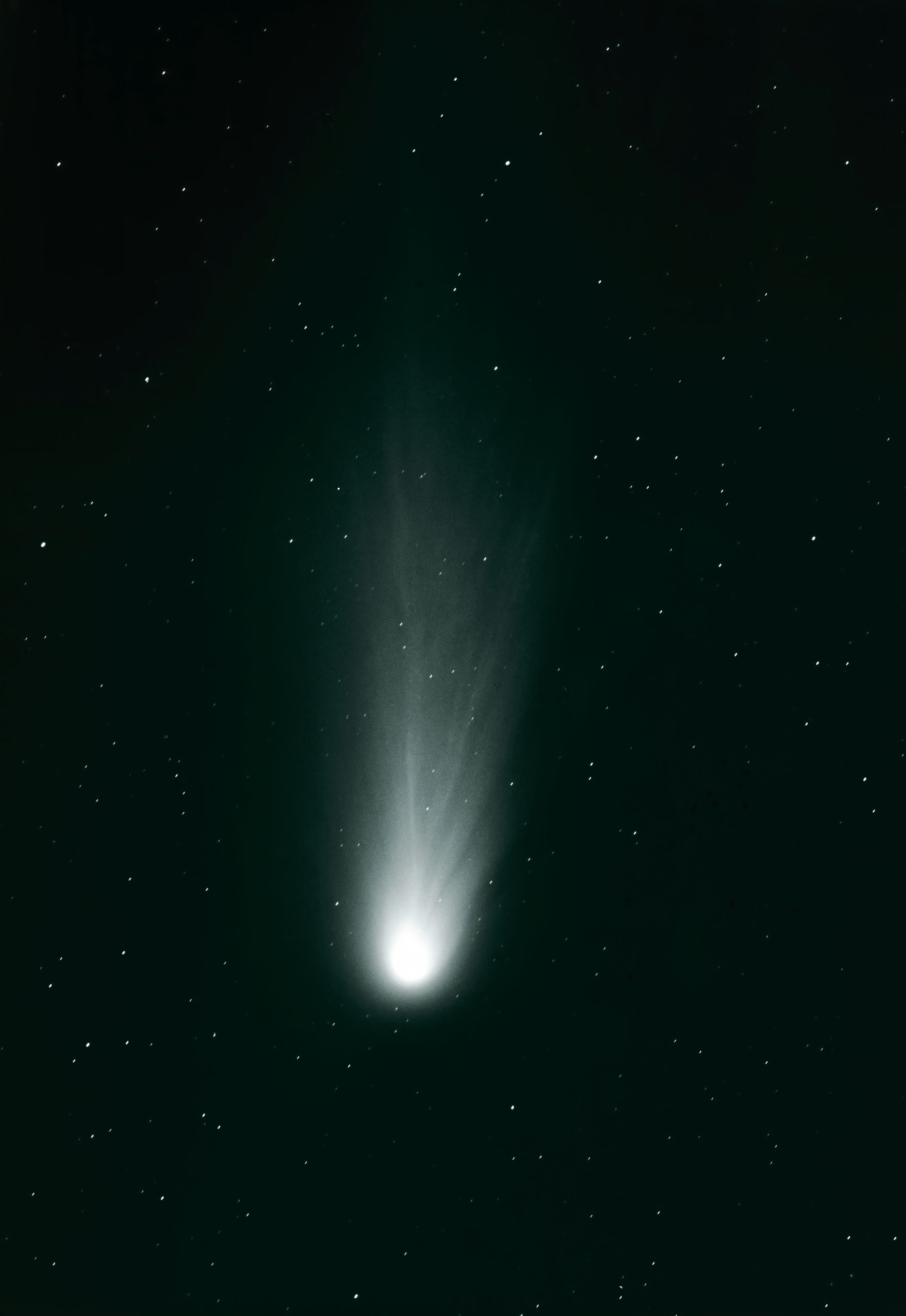
Halley's Comet, captured in 1986.
Photo: European Southern Observatory (ESO)And you can invest some time meditating on the proper pronunciation of “Halley.” (Opinion is split between “Hay-ley” and “Hall-ey.”) During the comet’s 1986 visit to the inner solar system, a reporter called every “Halley” telephone listing in the London directory, and asked, “How do you pronounce your name?” The most common answer was “None of your business.” So the mystery remains.
May 9
Last-quarter Moon, rising around midnight.
May 10
Birthday of Cecilia Payne in 1900. Payne was a young student of Arthur Eddington, the English astronomer whose writing brought awareness of modern physics to the audience of astronomers (not then well trained in physics). Payne could not pursue graduate study in England (Cambridge did not grant degrees to women until 1948), so Eddington arranged for her admission to Harvard. A few years later, she produced what Otto Struve called “the most outstanding thesis the U.S.A. has ever produced.” Payne knew much more about physics than most astronomers, and was able to show that the Sun was made mostly of hydrogen—an idea much doubted by astronomers at the time, since there is practically no atomic hydrogen in the Earth’s atmosphere. She went on to have a long career at Harvard as the world’s top expert on exploding stars. When I was a young student of that subject, I had dinner with her in 1978. She was way past her prime, and I was way short of mine, but it was unforgettable.

Cecilia Payne at the Harvard College Observatory.
Photo: Smithsonian InstitutionMay 15
On this day in 1836, Francis Baily discovered the phenomenon known as “Baily’s Beads”—the last bursts of sunlight shining through lunar valleys, visible only a few seconds before (and after) the totality phase of a solar eclipse. Remarkably, he observed it during an annular eclipse—an eclipse which just fails to be total, usually by a few percent. I hope he had good filtration, because it can be dangerous to mess around with solar eclipses during the partial phases.
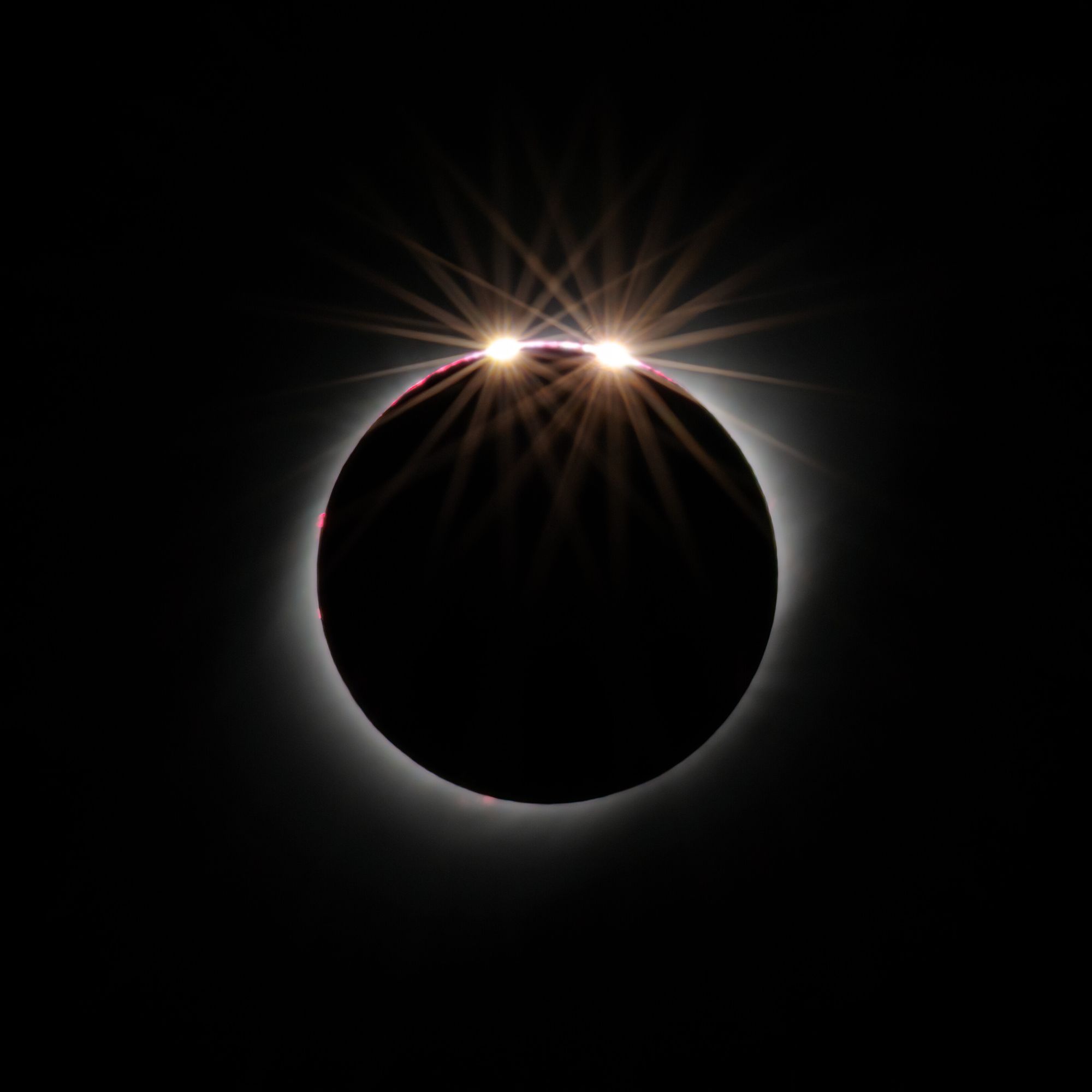
Baily's Beads, as seen in July 2019 by the Cerro Tololo Inter-American Observatory.
Photo: CTIO/NOIRLab/NSF/AURA/D. MunizagaMay 16
New Moon at 4:01 pm EDT
May 18
Thought to be the birthday in 1048 of Omar Khayyam, the great Persian astronomer, mathematician, and poet. Omar designed the Jalali calendar, still used today in the Middle East for religious purposes, since it’s slightly more accurate (one day error in 5,000 years) than our modern Gregorian calendar (one day error in 3,300 years). But he is best known for his beautiful poetry in the Rubaiyat, which has been published in many languages. In 1865, Edward Fitzgerald published an English translation which became a literary tornado, spawning hundreds of re-printings and translations into yet more languages. It even enchanted me at age 15, when my (voluntary) reading was mostly about baseball and war.
Up from Earth’s Center through the Seventh Gate.
I rose, and on the Throne of Saturn sate;
And many knots unravelled by the Road,
But not the knot of Human Death and Fate.
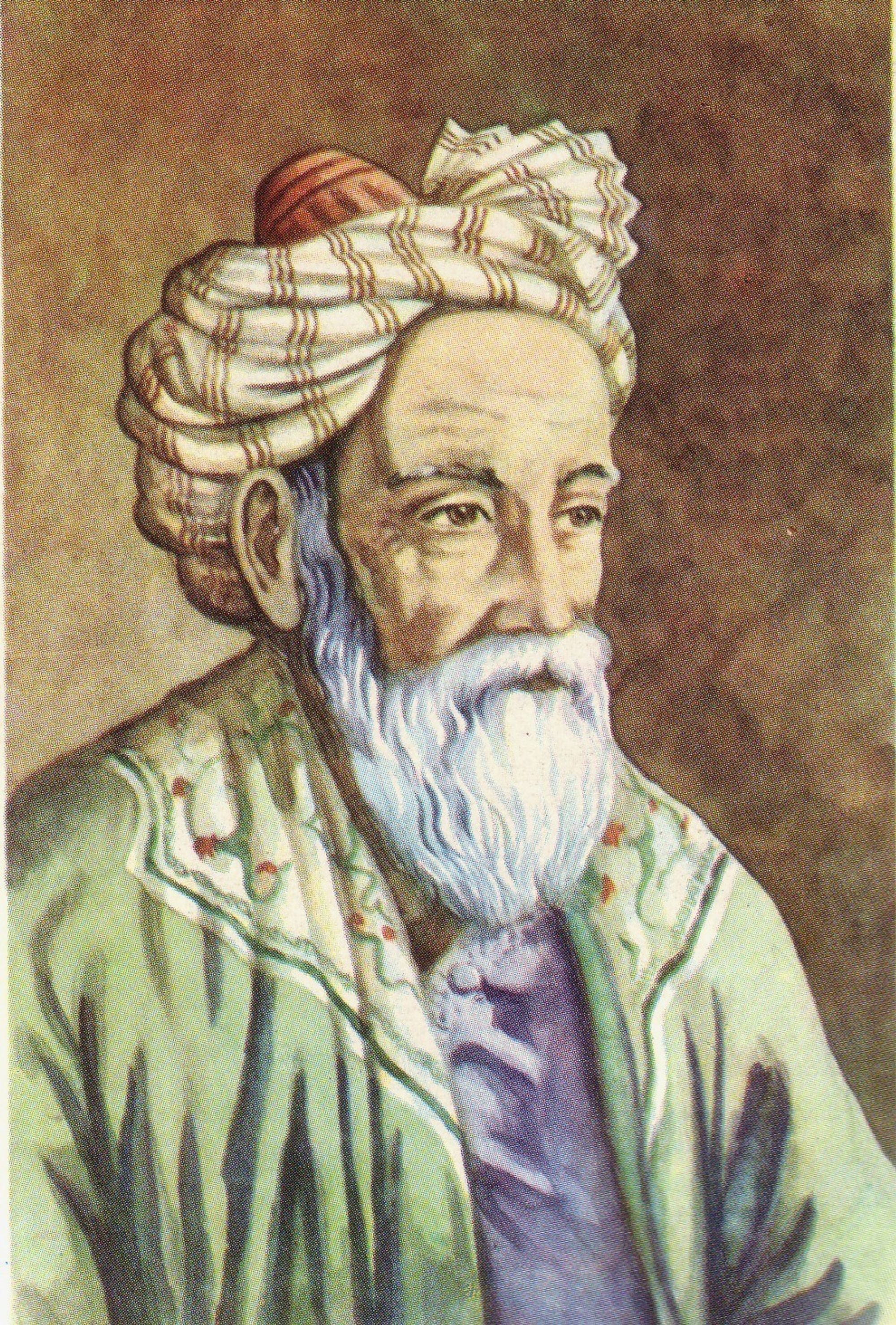
Omar Khayyam, as drawn by A. Venediktov.
Photo: Wikimedia CommonsA boatload of planetary and stellar alignments descends upon us! Venus is always the bright object low in the western sky, while Jupiter—no slouch!—looms above it. Slightly above Jupiter are the Gemini twins, Castor and Pollux.
May 18
Venus and Jupiter have been gracing the evening sky throughout early May. Tonight, the crescent Moon—which moves much faster of course—stands next to Venus. It’s a good night for viewing Earthshine —“the old Moon in the New Moon’s arms”!
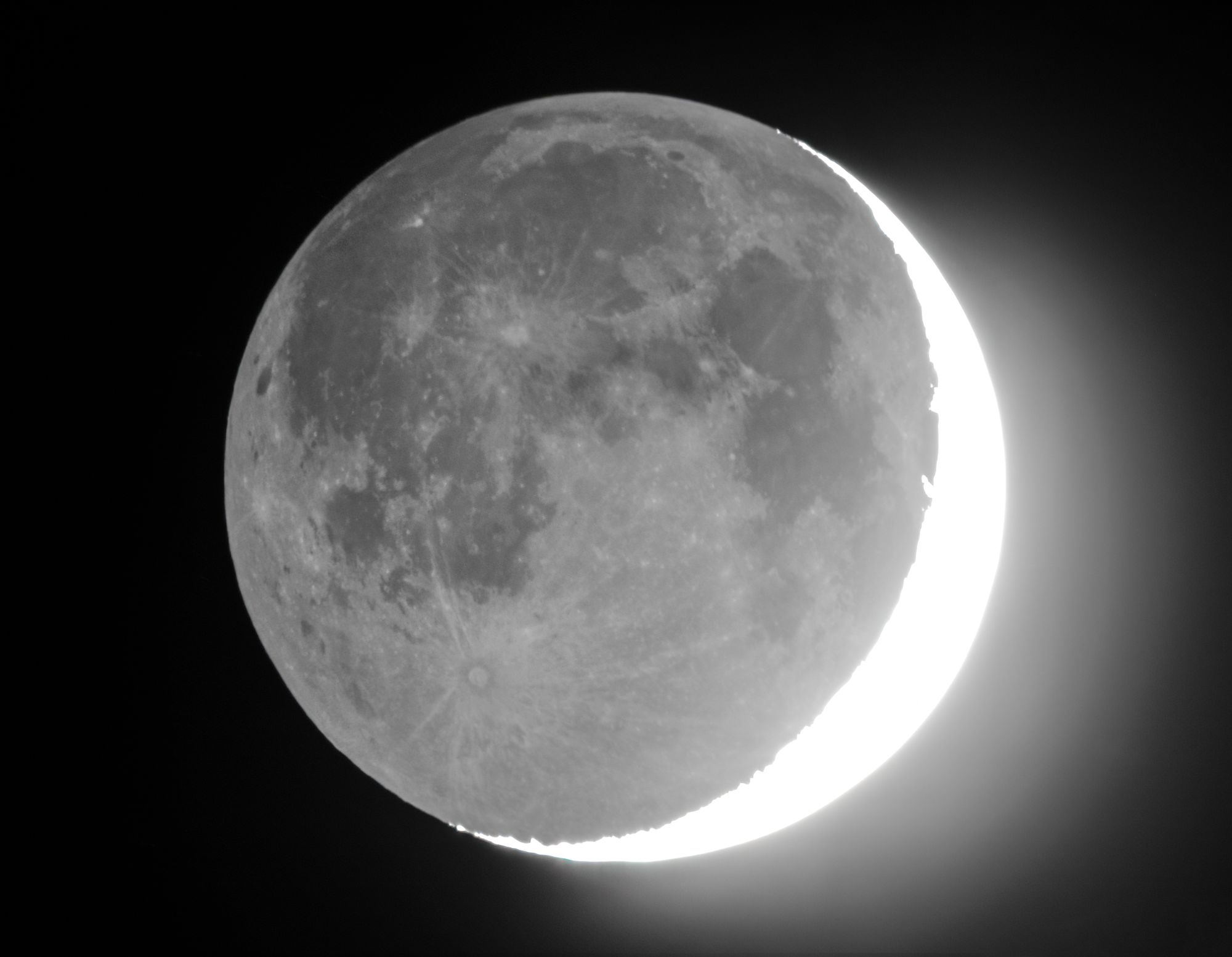
Earthshine, captured on June 20, 2023.
Photo: Kevin M. GillMay 19–21
The mid-April pile-up of bright objects in the evening sky repeats. The crescent Moon moves higher in the evening sky to join Jupiter on these nights. The Gemini twins, Castor and Pollux, are also close by. It’s a really beautiful scene in the west! Get out your color film and a wide-angle lens about 30–70 minutes after sunset.
May 28
The total solar eclipse on this date in 585 BCE was perhaps the most consequential in history. According to several famous (but not necessarily independent) sources—Herodotus, Pliny the Elder, and Cicero—it stopped a long-running war between two Greek city-states AND was predicted in advance by the Greek astronomer Thales. Most modern historians do not accept either claim, but scolding Herodotus (“The Father of History”) is usually not a good idea.
May 29
As if to challenge the ancient eclipse for preeminence, the one on May 29, 1919 is a worthy candidate. It was predicted long in advance, and the British launched an expedition to a West African island, led by Arthur Eddington, who hoped to photograph the field of stars right around the Sun during totality. Eddington had calculated how much the Sun’s gravity would bend the starlight, according to Einstein’s recently published theory of gravity (“general relativity”). Careful measurement confirmed the amount of bend predicted by Einstein. At the meeting of the Royal Society where this result was announced, it was described as the “greatest scientific achievement since Copernicus,” and the next day’s London Times headlined: “Newtonian Ideas Overthrown.”
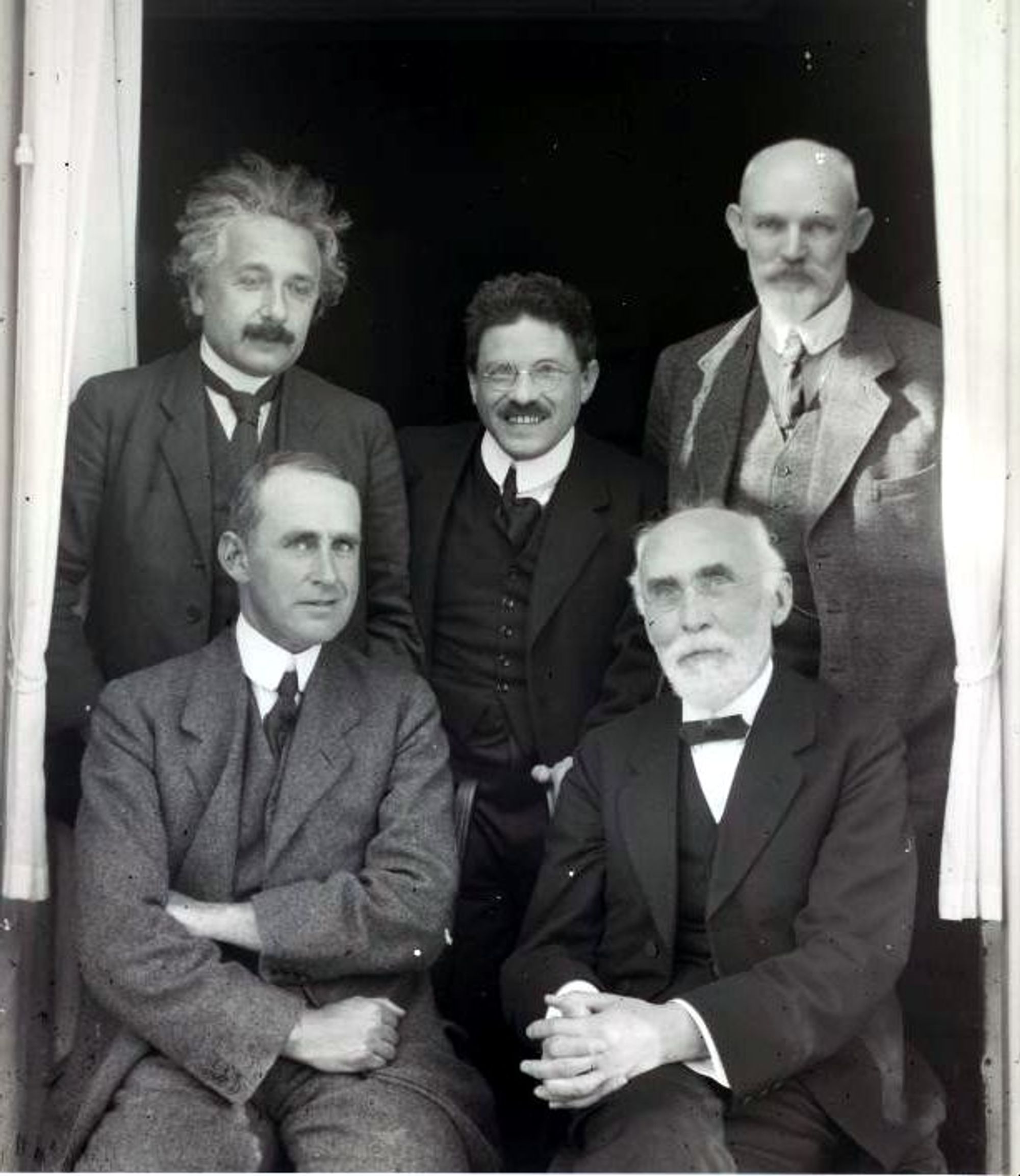
Arthur Eddington with Albert Einstein, Paul Ehrenfest, Willem de Sitter, and Hendrik Lorentz, 1923.
Photo: Leiden ArchivesEddington himself, another fan of Omar Khayyam, adopted Khayyam’s classic quatrain form to describe the event at the post-conference party. It ended:
Five minutes, not a moment left to waste.
Five minutes, for the picture to be traced.
The stars are shining, and Coronal Light
Streams from the Orb of Darkness—oh, make haste!
Oh, leave the wise our measurements to collate,
One thing at least is certain, that light has weight.
One thing is certain, and the rest debate:
Light rays, when near the Sun, do not go straight!
May 30
On this day in 1971, NASA launched Mariner 9, the first spacecraft to reach and orbit Mars. Mars was the great hope for finding alien life in the solar system, and that life was the subject of many science-fiction novels. Even Tarzan (hero of the African jungle) got into the act, conquering Mars at one point. There was great excitement that year about the expected close-up photographs. The spacecraft arrived in August, and the first photos looked pretty much like the views I got through my homemade six-inch telescope (Blurry!). Mars was in the grip of a planet-wide dust storm, and hardly any detail could be seen. A few weeks later, the dust subsided and we got some great viewing slightly before dawn of a giant Martian volcano, along with the first hint of dried-up Martian river valleys.
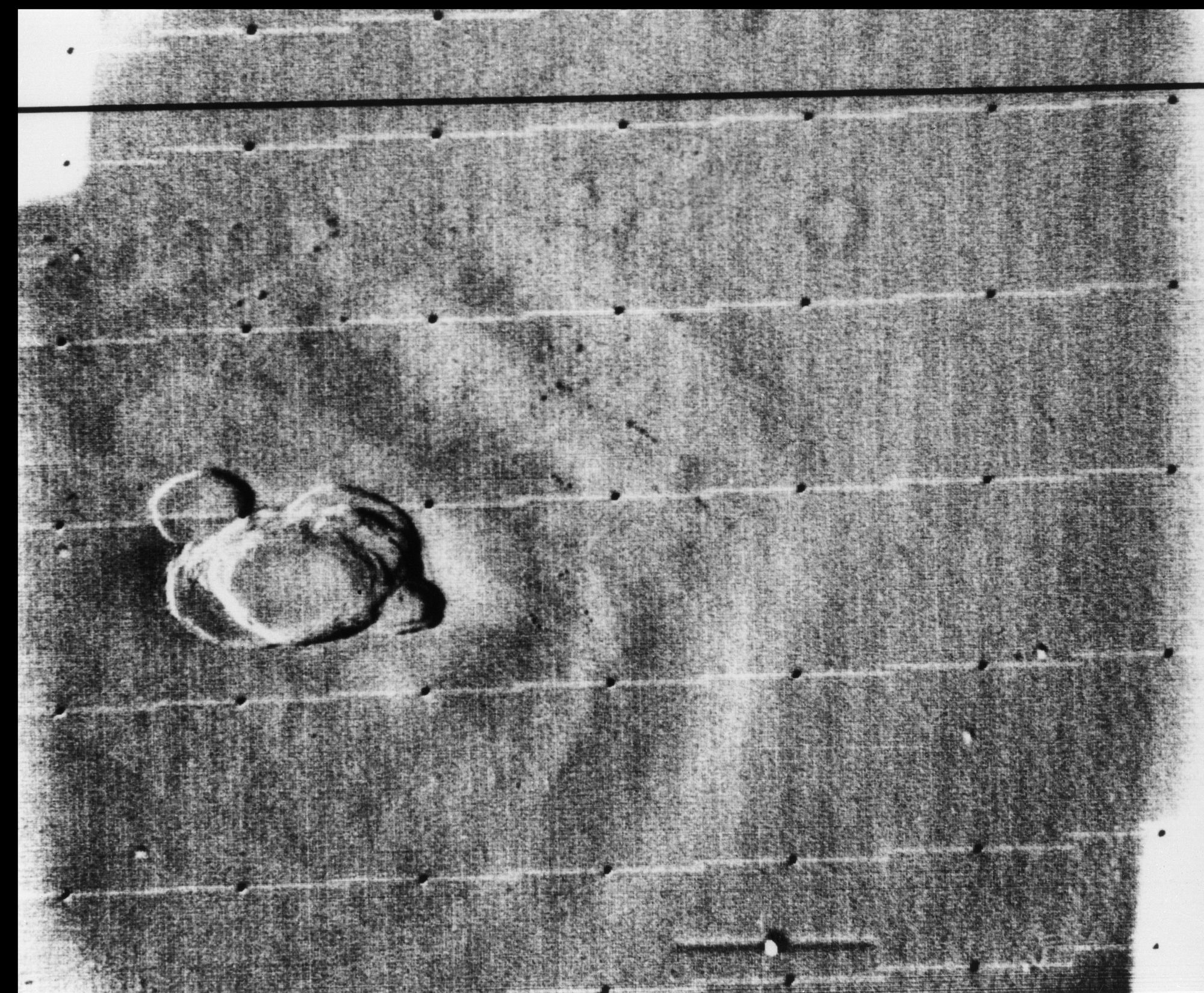
Mariner 9 views of the Martian dust storm, 1971.
Photo: NASA/JPLMay 31
Sunrise 5:27 am EDT
Sunset 8:20 pm EDT
Full Moon at 4:45 am EDT—the second Full Moon in May! This is sometimes called a “Blue Moon,” though probably not by Elvis Presley in 1957. It happens roughly every three years or so.
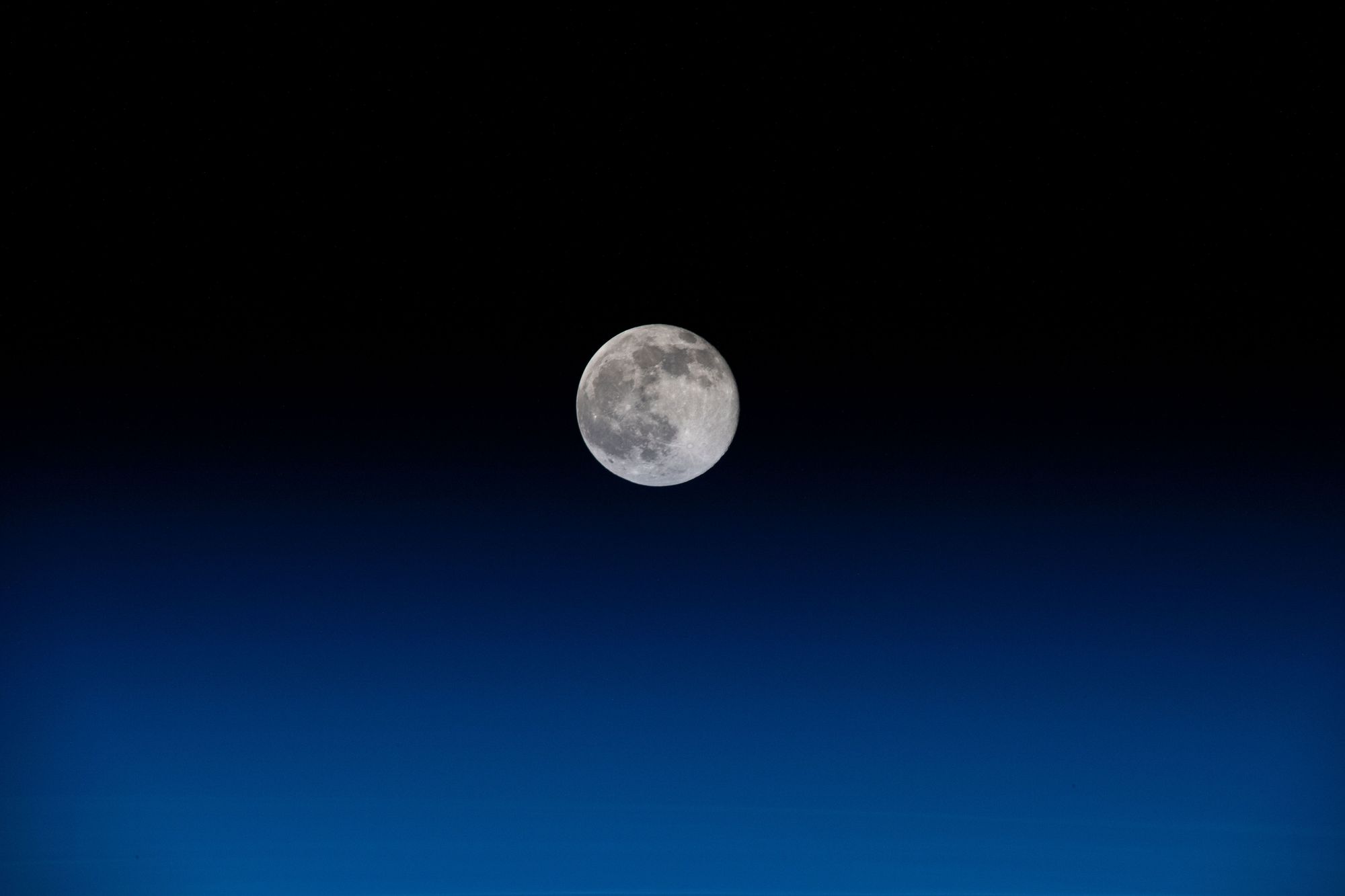
The Full Moon over China, near the Mongolian border, 2021.
Photo: NASA/JSCJune
June 1
Sunrise 5:27 am EDT
Sunset 8:21 pm EDT
June 8
Last-quarter Moon, rising around midnight.
June 8–15
Another great convocation of bright objects in the evening sky. Jupiter and Venus are shining very brightly, low in the west and practically on top of each other. Venus is the brighter of the two, of course. Just to their right are the Gemini twins, Castor and Pollux. And below the conjunction comes Mercury, on one of its rare visits.
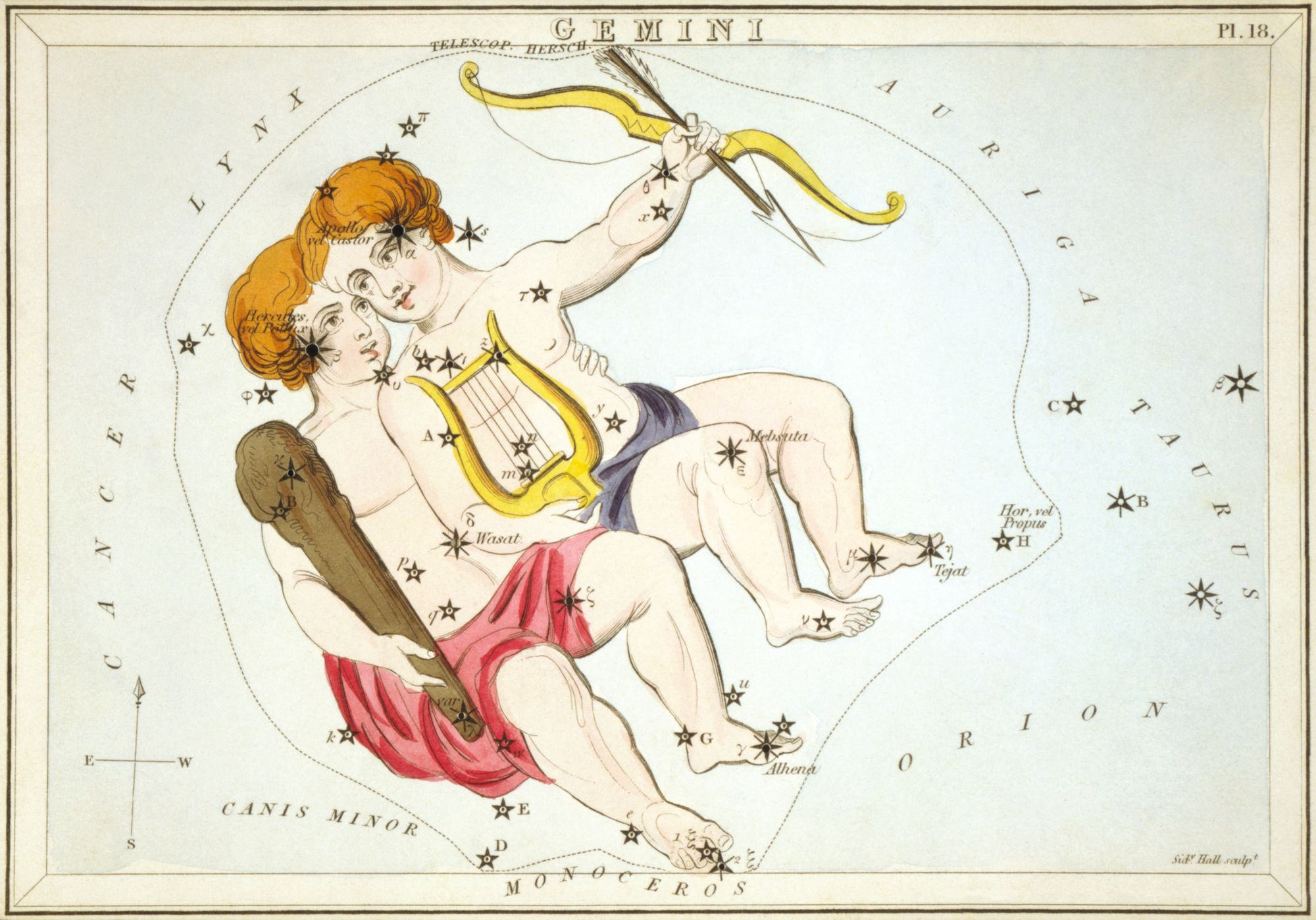
Gemini, plate 18 from Urania's Mirror, a set of celestial cards made in London by Sidney Hall and Richard Rouse Bloxam in 1825, and restored by Adam Cuerdon.
Photo: Wikimedia CommonsJune 16–17
The thin crescent Moon can’t resist charging into the conjunction on these evenings. It’s practically on top of Venus on the night of June 17—another great opportunity to see or photograph “the Old Moon in the New Moon’s Arms.”
June 10
On this day in 1854, a young German mathematician gave a “job talk,” hoping to secure a faculty appointment at the university in Gottingen. His name was Georg Riemann, and he discussed what we now call “Riemannian geometry”—a system in which the normal laws of plane geometry fail. Fortunately for the future of mathematics, he got the job. Unfortunately, his life was short (he died at 39), but his work inspired generations of mathematicians, including probably Lewis Carroll (otherwise known as Oxford mathematician Charles Lutwidge Dodgson) whose famous works suggest settings in which all familiar assumptions fail (“six impossible things before breakfast”). Albert Einstein always credited his discovery of Riemann’s geometry as leading to his work on gravity (general relativity).
According to Walter Isaacson, this was also the date in 1752 when Ben Franklin flew his kite into a lightning storm, essentially proving that lightning is electricity.
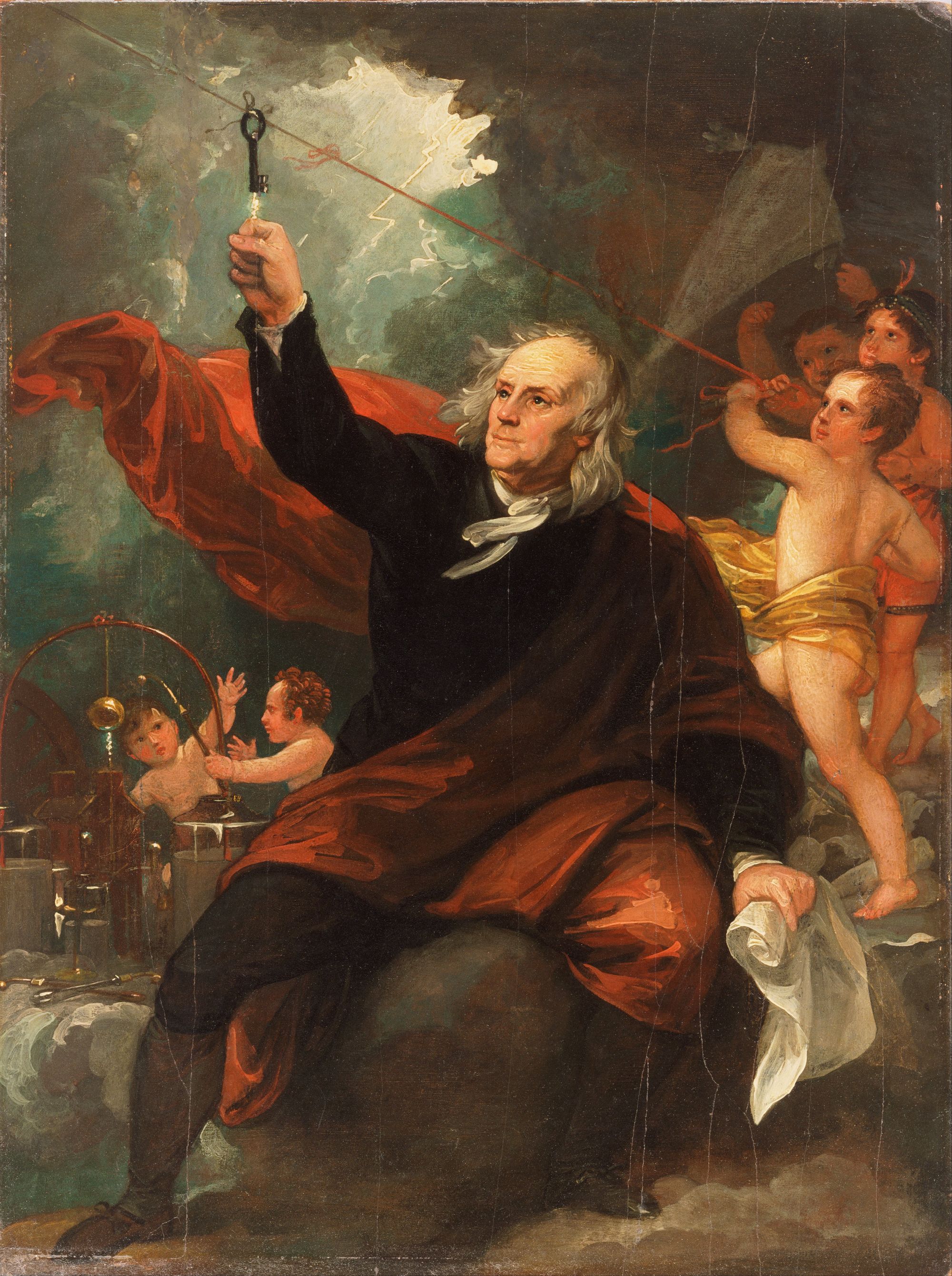
Benjamin Franklin Drawing Electricity from the Sky, Benjamin West, c. 1816.
Courtesy of Philadelphia Museum of ArtJune 12
On this day in 1962, a rocket was launched with a detector sensitive to x-rays. Its team of scientists had previously detected x-rays from the Sun, so they figured, “Why not the next brightest thing in the sky—the Moon?” During the five-minute flight above the Earth’s atmosphere, they found x-rays, but not from the Moon. They came instead from a little patch of sky with nothing distinctive in it—not a planet, galaxy, bright star, or anything familiar. Later flights identified the source as a faint blue star with an odd spectrum. It was named Scorpius X-1, and it became the subject of hundreds of papers speculating about its nature.
Scorpius X-1 turned out to be a neutron star—a tiny, solid star made entirely of neutrons. If another, normal star is orbiting very close by, gas from the companion star will get pulled by the immense gravity, and come crashing down onto the neutron star surface, producing copious x-rays. X-1 was the first of many thousand such stars since found in the Galaxy.
A few years later, a similar object was discovered, called “Cygnus X-1.” It contained not a neutron star but a black hole, the first one discovered. In those days, x-ray binary stars received swashbuckling names. (I'm sure my black cat wasn't the only one named Cygnus.) Nowadays, these stars get names like 3XMM J004232.1+411314. It’s time for a change in nomenclature!
June 13
Birthday of Thomas Young in 1773. Young is most famous for his wave theory of light, and he was the first to explain interference phenomena. He made many discoveries in diverse fields: vision, mathematics, history, Egyptology, music, energy, and the theory of matter. And these were just his hobbies! His main job was as a physician—a doctor—and he went to some trouble to prevent his amazing scientific work from interfering with his medical practice. For good reason, he is frequently described as “the last man who knew everything.”
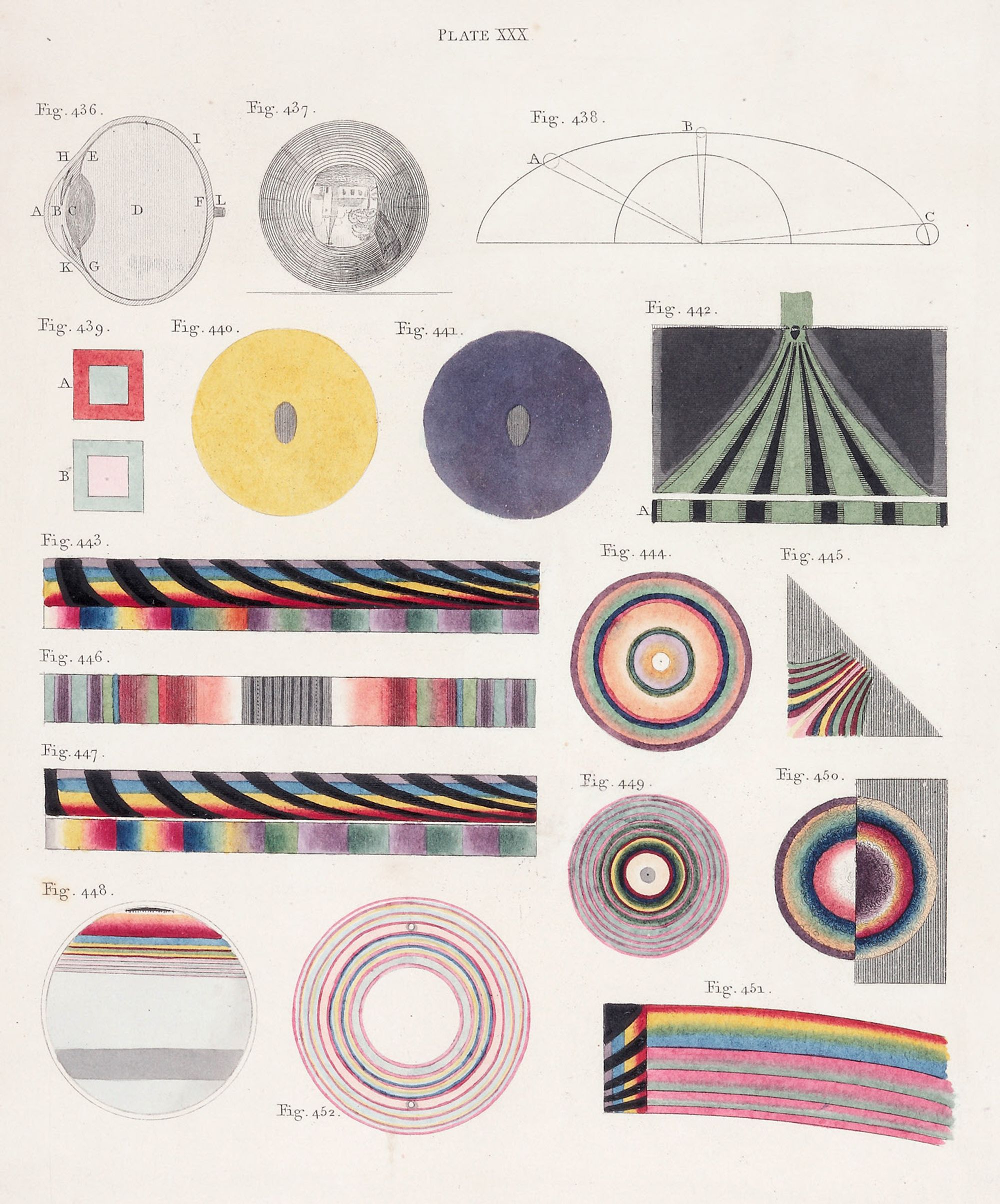
Image of a plate from Thomas Young’s 1802 lectures showing his grasp of ocular anatomy.
Photo: Wikimedia CommonsJune 14
New Moon at 10:52 pm EDT.
With the Moon now effectively out of the sky, it’s a perfect time to do some summer stargazing. The brightest parts of the Milky Way Galaxy appear in our sky any dark night from 11 pm–3 am. Look south to see the central regions of the Milky Way, or overhead to see the Northern Milky Way (Cygnus the Swan and its neighbor constellations). But moonlight and city lights (especially!) are your sworn enemies in this enterprise. If you don’t manage this in late June, the New Moon in late July will be just as good.
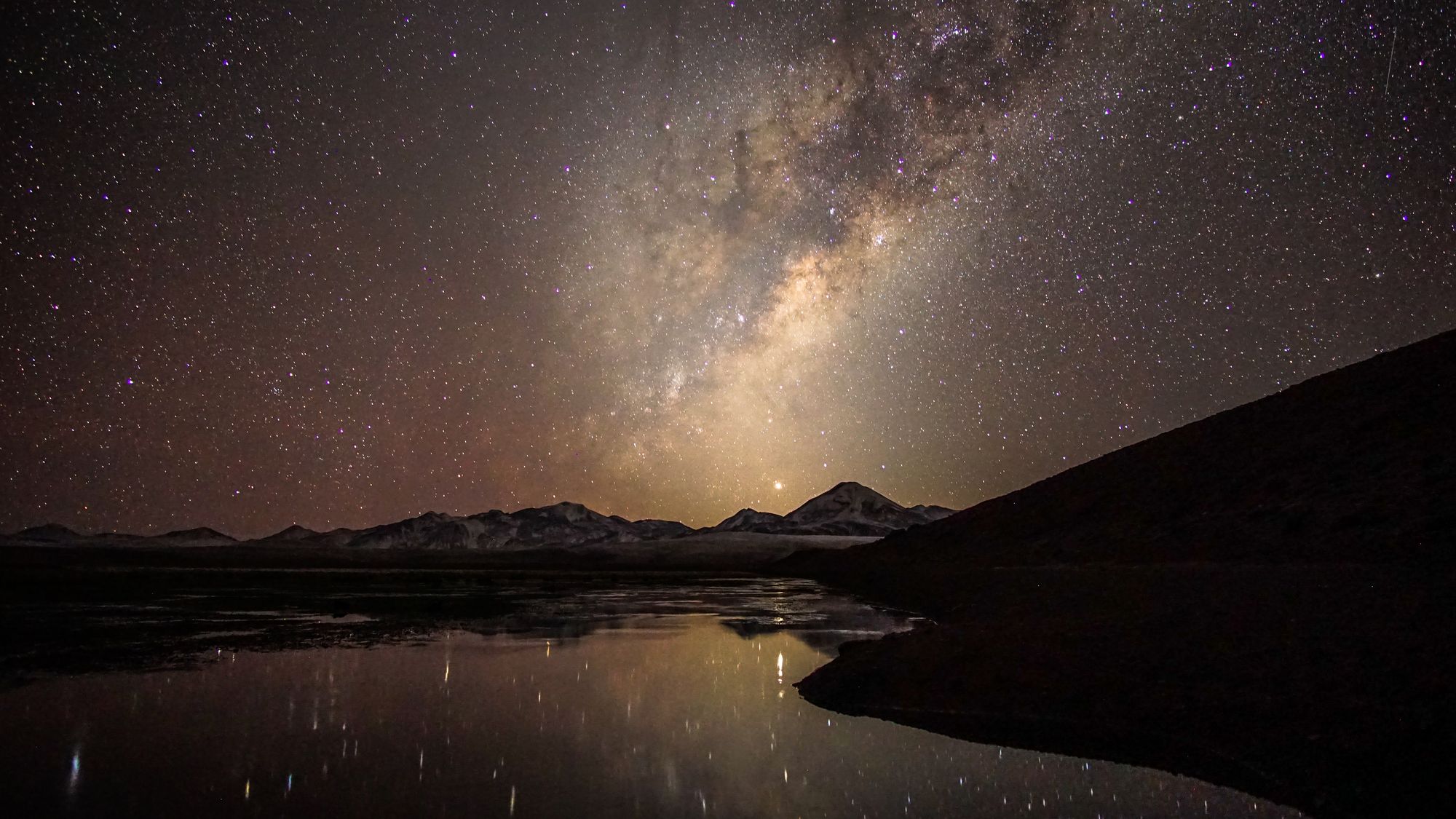
The Milky Way, 2020.
Photo: Pablo CarilloJune 16
Mercury is at its greatest western elongation, and can only be seen in the morning or evening twilight because it orbits so close to the Sun. A week on either side of this date, you might glimpse it, quite low in the eastern sky, about 45 minutes before sunrise. But don’t bet the farm on it—sightings of Mercury are rare and demand excellent viewing conditions. During this week, they’ll also require viewing around 4:30 am.
June 20
Last-quarter Moon, rising around midnight. Excellent time to scan the Moon's craters with a telescope or binoculars. The Sun is setting over the most heavily cratered region on the Moon, creating more contrast than usual.
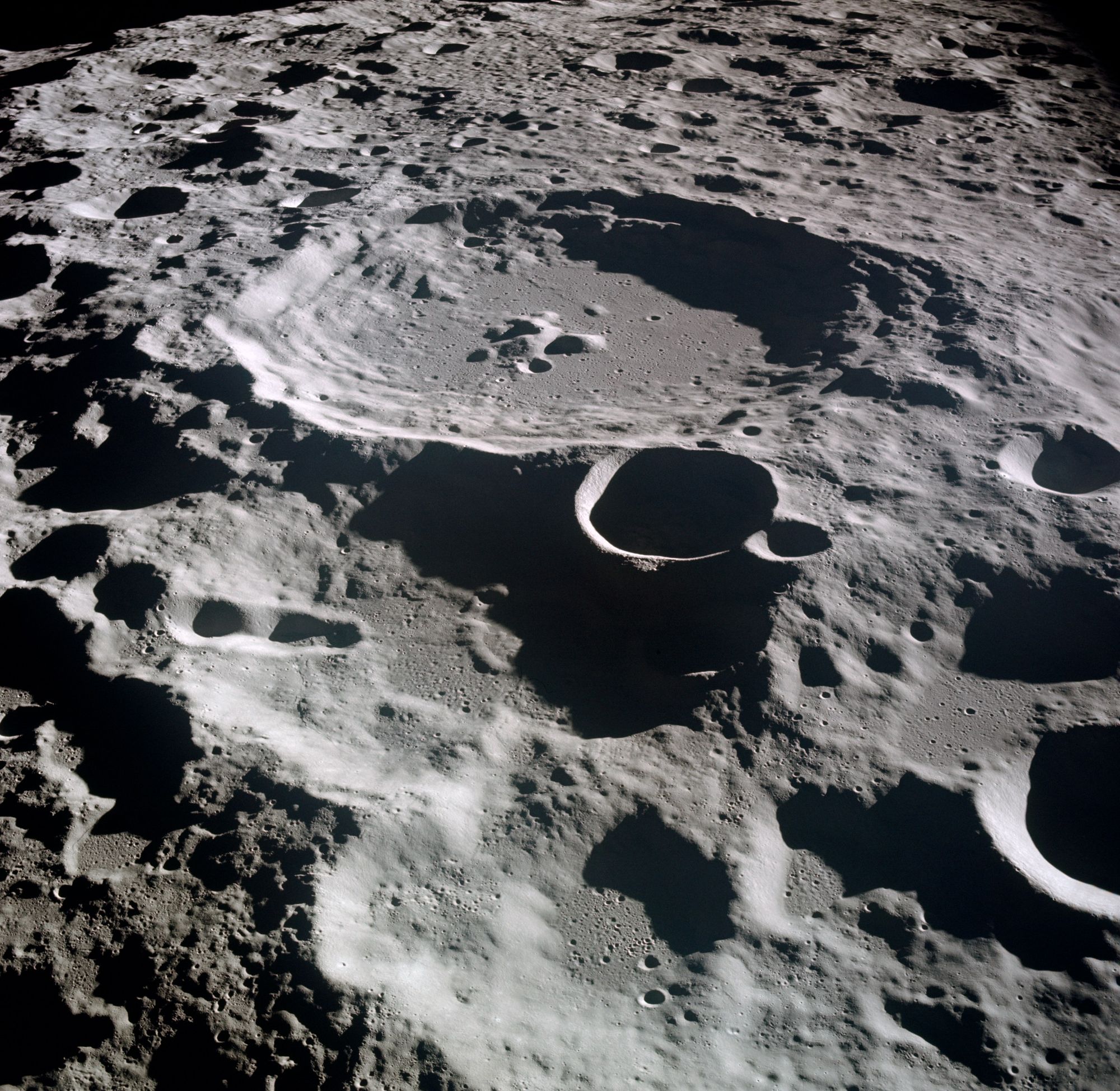
The lunar crater Daedalus, pictured from Apollo 11.
Photo: NASAJune 21
Summer solstice begins at 4:23 am EDT. Or, for hemispheric correctness, we can call it the June solstice. The noontime Sun is high in our sky, and it’ll stay there continuously in the North Pole for three more months. In Fairbanks, Alaska, which is almost exactly on the Arctic Circle, the Sun “sets” at midnight, and “rises” a few minutes later—so the day is essentially a 24-hour affair. They have a golf tournament where the golfers tee off at midnight! At the South Pole, where the Sun disappeared on March 21, it’s now fully dark, and that darkness will only be relieved by a little tinge of twilight starting in mid-August. (The Sun won’t actually rise until September 23.) At the U.S.A. South Pole research station, they have a “200-degree club” today. You disrobe, soak in 100-degree (or more if needed) water, run a few hundred yards to the exact S pole, and bring back evidence of having been there.
The golf tournament sounds like a better deal.
June 22
Bertolt Brecht said it best on a large curtain which appeared at the beginning of Act Seven of his play Galileo:
June 22, 1633.
A momentous date for you and me.
Of all the days, that was the one,
An age of reason could have begun.
On this day, Galileo was convicted of heresy by the Roman Inquisition and sentenced to lifetime house arrest. Brecht’s play beautifully captures the subtleties and conflicts leading up to this moment, which virtually extinguished science in Italy and much of the Catholic world for hundreds of years (the offending book, Dialogue Concerning the Two Chief World Systems, remained on the official Index Librorum Prohibitorum—the Index of Forbidden Books— until 1835). Even at the time, and within the Catholic hierarchy, the controversy of the verdict was recognized. Three of the 10 Inquisitors did not sign the Oath—they may have members of the Jesuit order, which supported Galileo and has always been known for scholarship (plus, more recently, basketball).
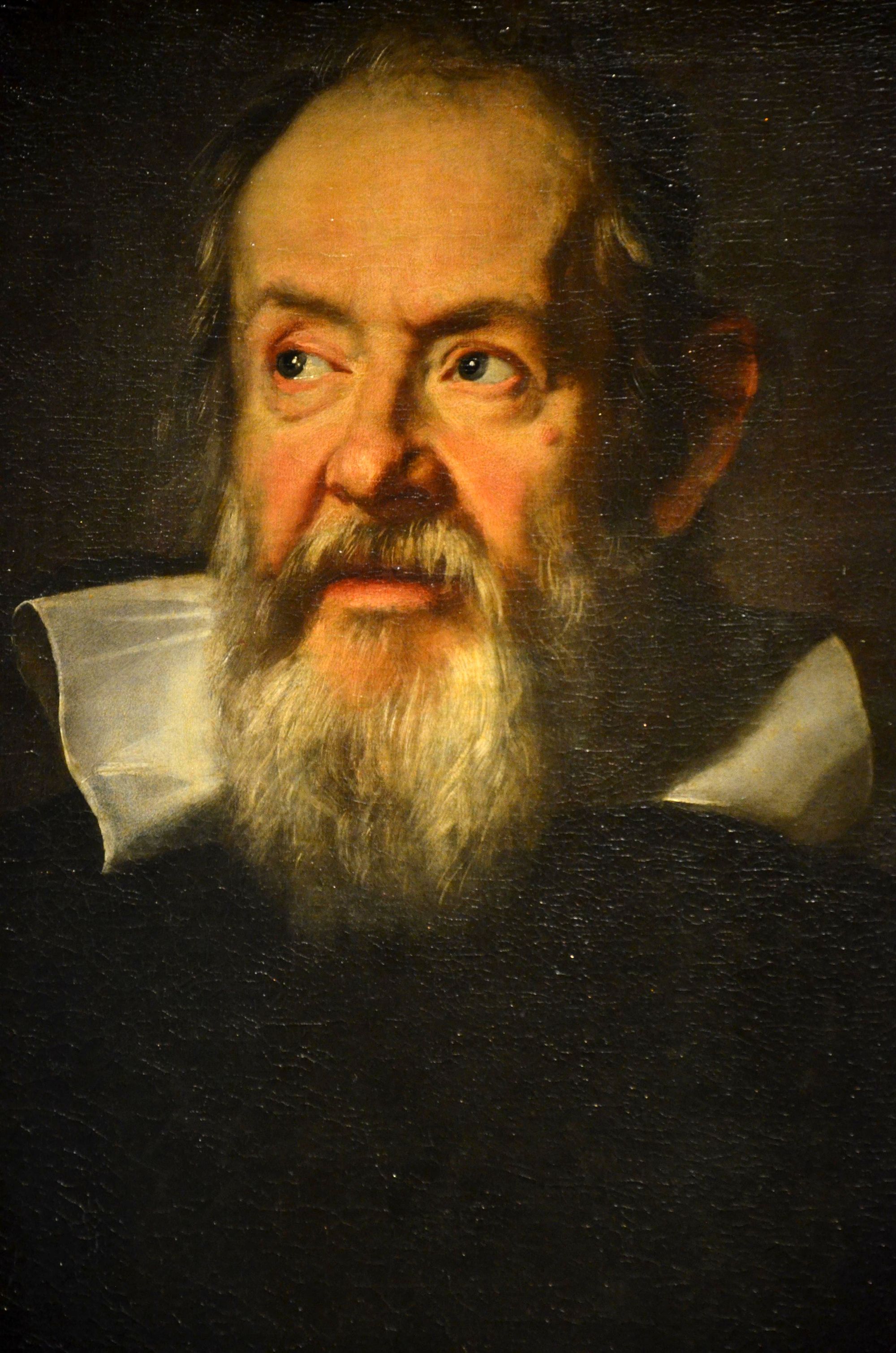
Galileo-Galilei, Justus Sustermans, 1635.
Courtesy of Wikimedia CommonsThere is a story that Galileo, after his guilt was pronounced and the proceedings were finished, said quietly but audibly, “Eppur si muove” (“And yet it moves”), referring to the Earth. In his book, The Crime of Galileo, the historian Giorgio di Santillana contemplates if he really uttered those words. For a man just convicted by the Inquisition, it would have been a pretty snarky comment. Di Santillana eventually concludes: Maybe… but if he did, the Inquisitors “would have done their best not to hear.”
June 30
Sunrise 5:28 am EDT
Sunset 8:31 pm EDT

Near the Tunguska River in Russia, captured in 1929 (21 years following the event) by the Leonid Kulik expedition.
Photo: Leonid KulikTunguska! On this day in 1908, a gigantic explosion occurred in a remote region of Siberia. Years later, a Russian astronomer, leafing through a book in a library, found a newspaper clipping from 1908 which described the event (apparently someone had used it as a bookmark). It intrigued him, and he launched an expedition to the area, near the Tunguska River. He found the region completely devastated. Over a radius of 20 miles, millions of trees had been knocked down in a radial pattern, and there were many skeletons of dead reindeer. This was obviously the remnant of the 1908 explosion. Interviews with local residents reported the site looking like “a piece broken off the Sun.” We still don’t know exactly what caused this event, which struck with an energy many times greater than the Hiroshima bomb. Most astronomers think it was the impact of a small comet or asteroid, which broke up on encountering the Earth’s atmosphere (thus explaining the lack of a crater). ♦
Subscribe to Broadcast